WannaCry: Anatomy of a Ransomware Outbreak
PHYO PAING HTUN ChiLai ·
Executive Summary
This report documents the investigation of a WannaCry (WanaCrypt0r 2.0) ransomware infection observed in a controlled system environment. WannaCry is a self-propagating cryptoworm that encrypts user files and demands a Bitcoin ransom for their recovery. The specimen analysed (SHA-256 ed01ebfb…080e41aa) exhibited the family’s hallmark behaviour: an initial kill-switch domain check, rapid mass encryption of user data, deployment of a multi-language ransom interface, and establishment of persistence and anonymised network communication.
Execution began when the user launched the malware, which immediately queried its kill-switch domain. With the domain unresolved, the malware proceeded to spawn a chain of child processes to hide files, grant broad permissions, establish a Run-key for persistence, and display the ransom note. It generated cryptographic key files, appended the .WNCRYT extension to victim files at roughly 100 files per minute, distributed @Please_Read_Me@.txt across user directories, and changed the desktop wallpaper to the ransom message. Outbound TCP connections to Tor directory infrastructure (81.30.158.213:9001) indicated an attempt to establish an anonymous command-and-control channel.
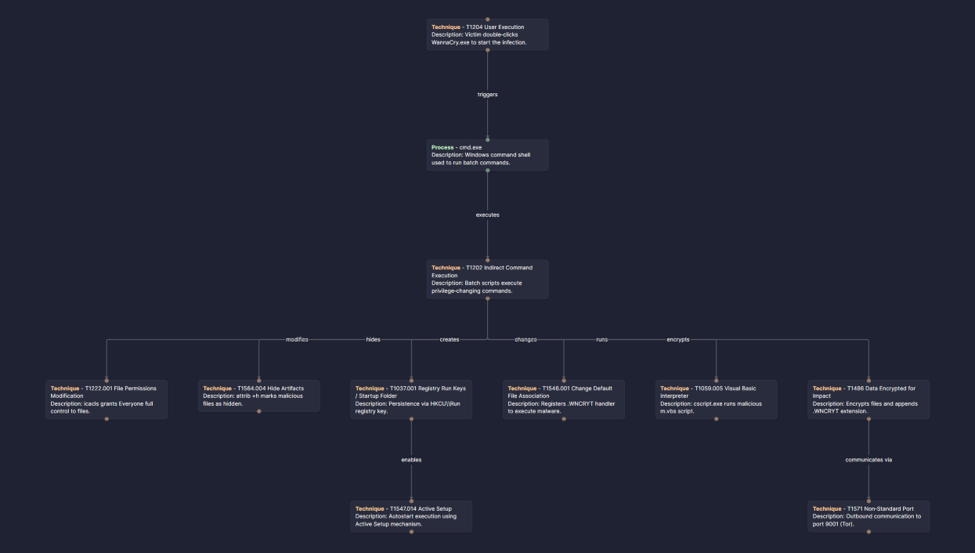
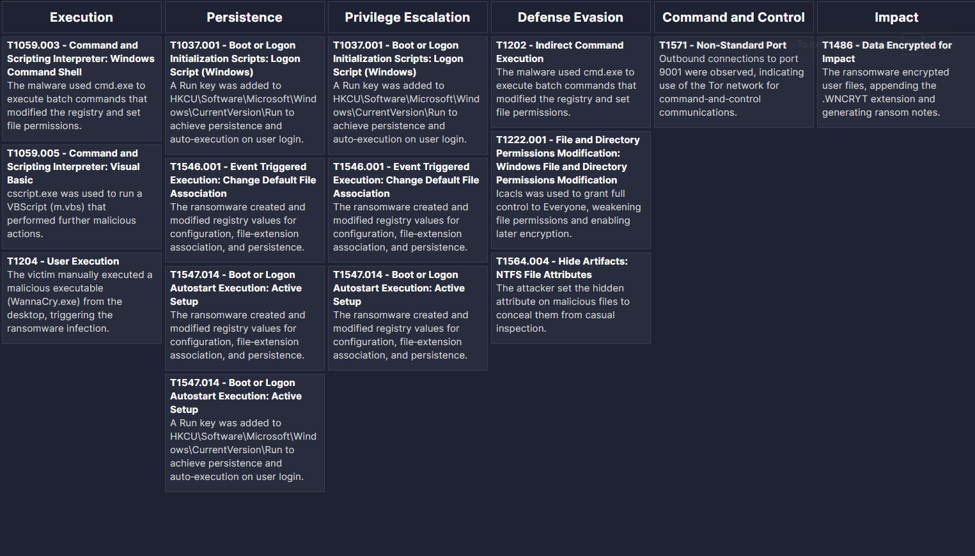
The infection maps to several MITRE ATT&CK techniques including User Execution (T1204), Registry Run Keys persistence (T1547.001), Data Encrypted for Impact (T1486), and Inhibit System Recovery (T1490). The single mutex Global\MsWinZonesCacheCounterMutexA0 prevents re-infection and is a reliable host-based indicator. The sections below summarise the response and mitigation actions, strategic recommendations, and provide ready-to-deploy YARA and Sigma detection rules derived from the indicators of compromise identified during this investigation.
Key Findings at a Glance
Family / impact: WanaCrypt0r 2.0; demands $300–$600 in Bitcoin with a 3-day / 7-day escalation deadline.
Entry / trigger: User execution of WannaCry.exe, followed by a kill-switch domain check that failed to resolve.
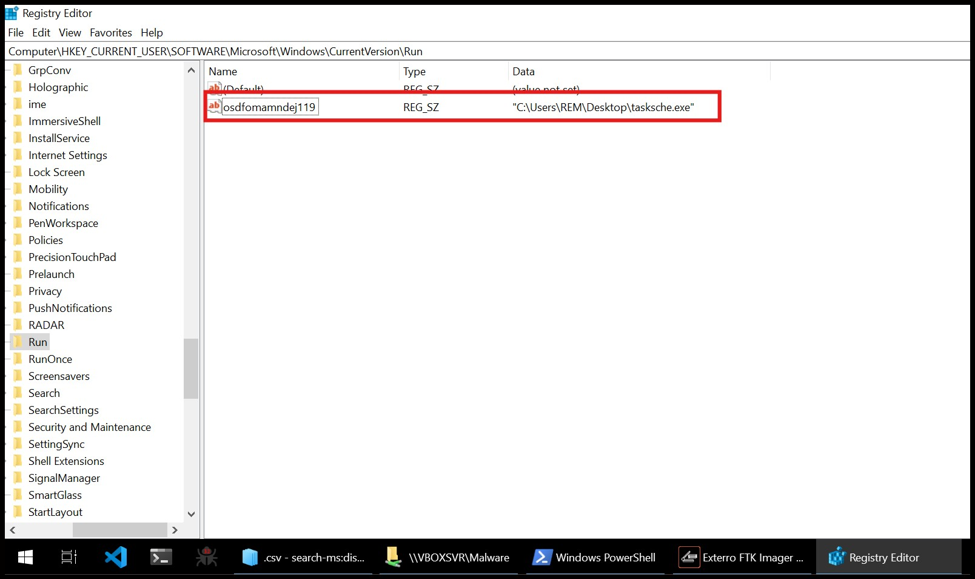
Persistence: HKCU Run key “osdfomamndej119” → tasksche.exe ensures autostart on logon.
Impact: 10,000+ files encrypted with the .WNCRYT extension at ~100 files/min.
Network: Outbound Tor connection to 81.30.158.213:9001 for anonymised C2.
Strongest IOCs: Mutex Global\MsWinZonesCacheCounterMutexA0 and SHA-256 ed01ebfb…080e41aa.
ATTACK CHAIN
MITRE ATT&CK Matrix
Technical Details
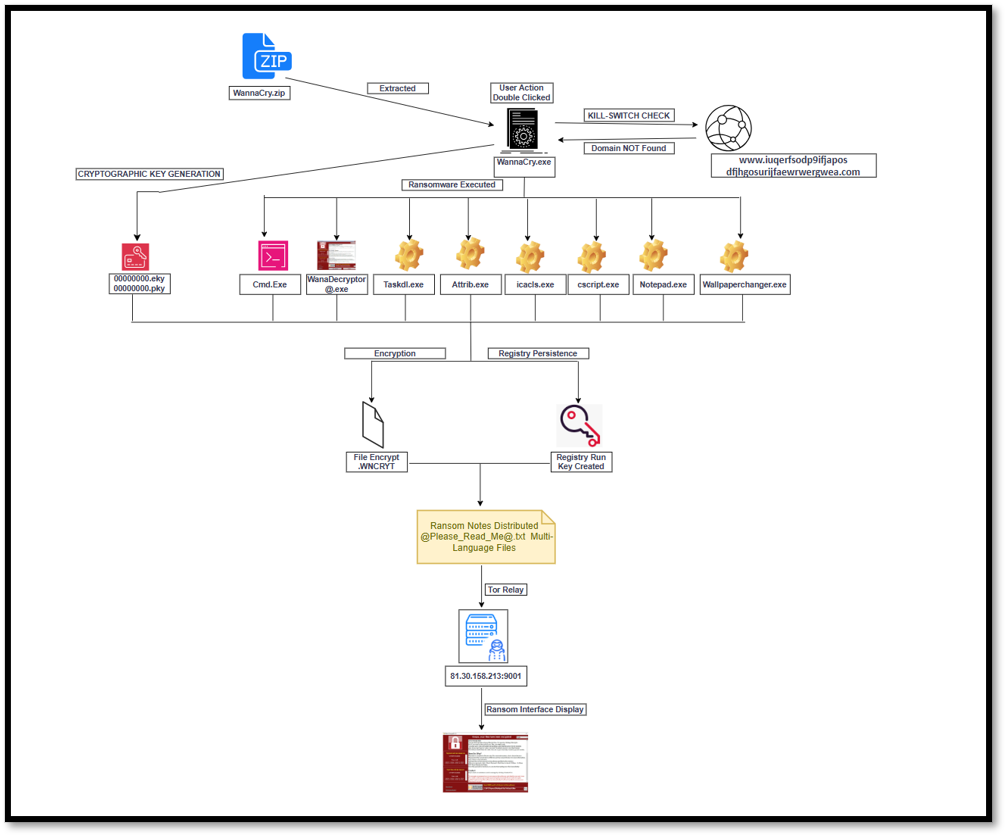
1. Initial Infection - User Click
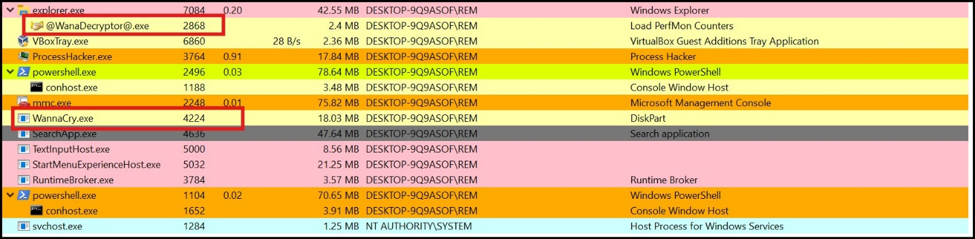
User double-clicked WannaCry.exe on desktop
Malware immediately performed kill-switch domain check
Domain resolution failed → encryption process initiated
Kill-Switch Mechanism
Domain Checked: www.iuqerfsodp9ifjaposdfjhgosurijfaewrwergwea.com
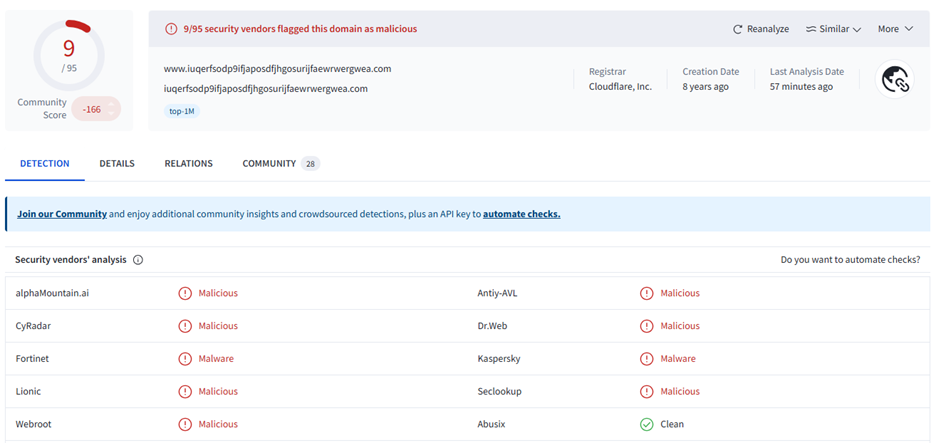
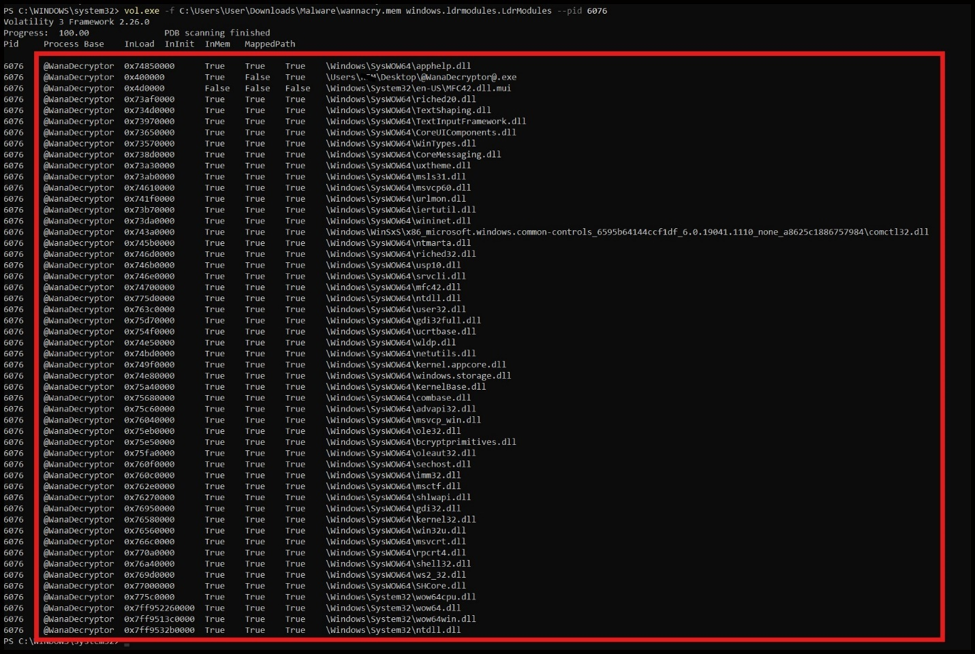
Process: @WanaDecryptor@.exe DLL Loaded: urlmon.dll (address 0x74850000) Result: Domain not found → Malware continued execution
Ransom Interface Display Window Details:
Title: "Wana Decrypt0r 2.0"
Background: Red with white lock icon
Payment Amount: $600 Bitcoin
Bitcoin Address: 12t9YDPgwueZ9NyMgw519p7AA8isjr6SM
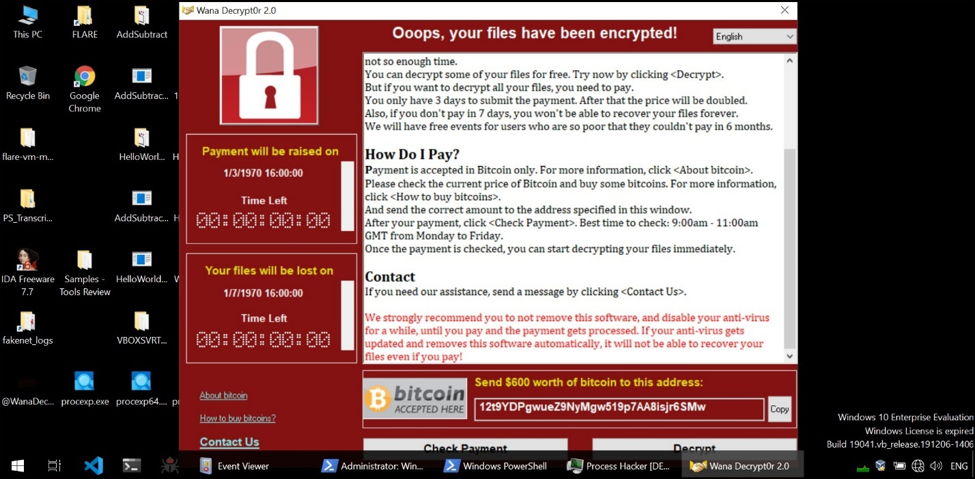
Threat Messages: "Ooops, your files have been encrypted!"
Payment deadline: 3 days ($300 → $600)
File deletion threat: 7 days total
2. Process Creation & Execution Chain
Primary Process
Process Name: WannaCry.EXE Parent: explorer.exe (user-initiated) Location: C:\Users\.\Desktop\WannaCry.exe
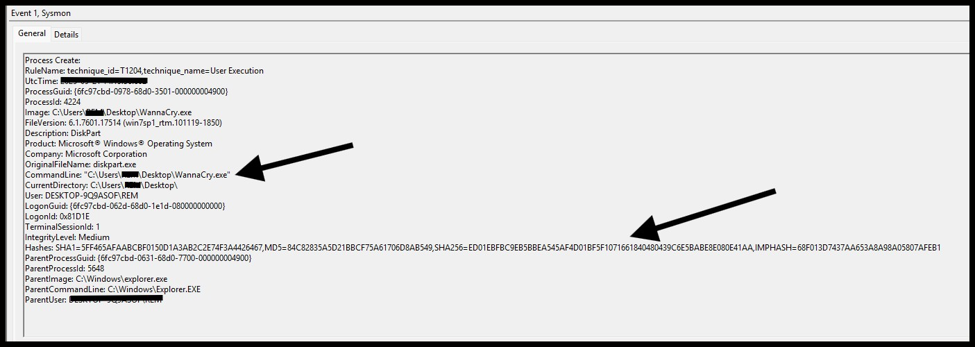
Child Processes Created
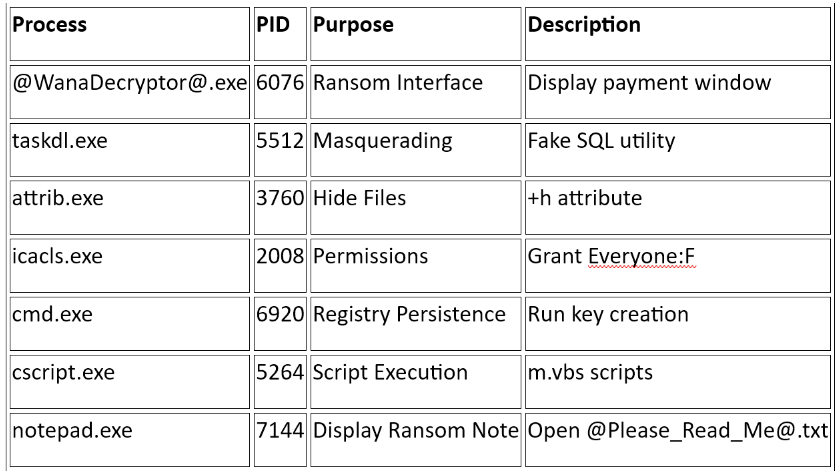
Key Commands Executed
@WanaDecryptor@.exe ( Display Payment Windows )
Hide malicious files (attrib +h .)
Grant full permissions (icacls ./grant Everyone:F /T /C /Q)
Create persistence reg add HKCU\SOFTWARE\Microsoft\Windows\CurrentVersion\Run /v "osdfomamndej119" /t REG_SZ /d "C:\Users\REM\Desktop\tasksche.exe" /f
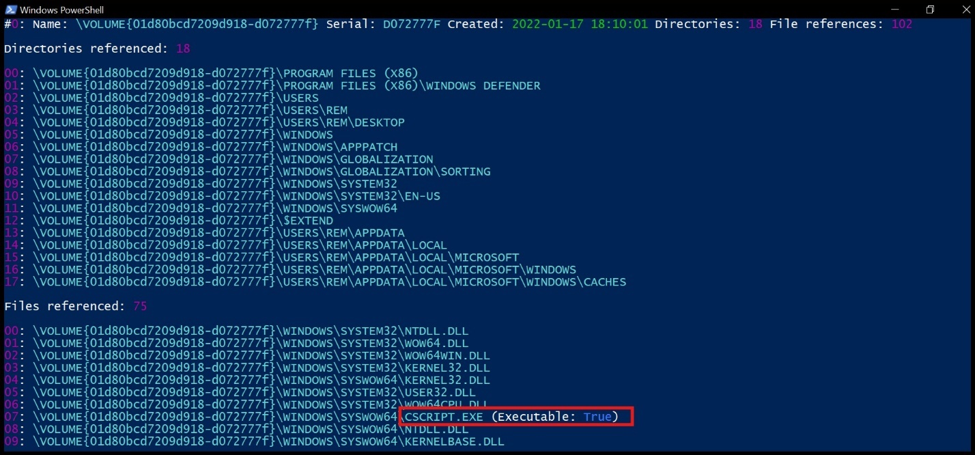
Execute scripts (cscript.exe //nologo m.vbs)
taskdl.exe (The malware creates a thread that executes the process taskdl.exe every 30 seconds.)
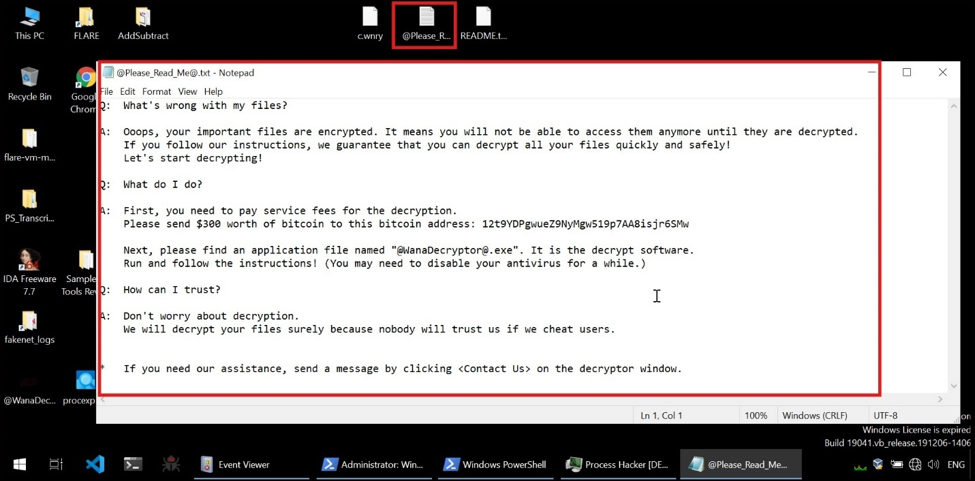
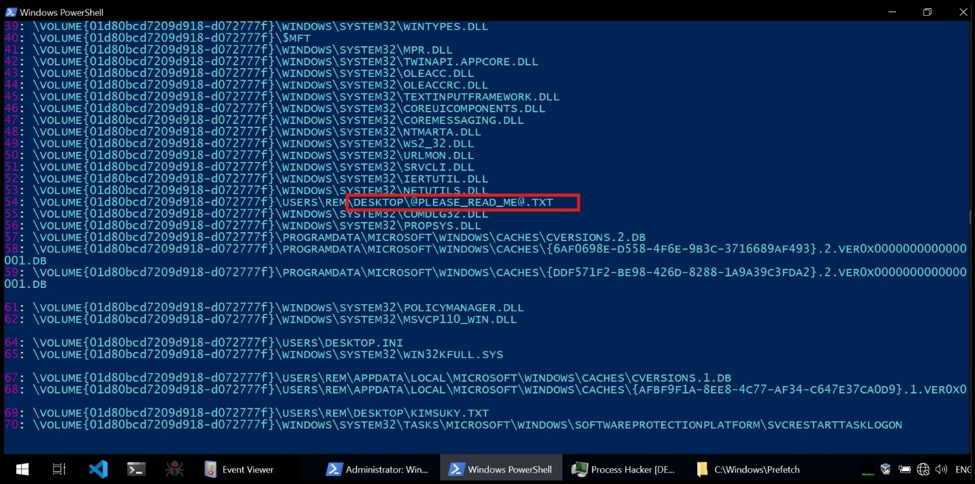
Notepad.exe (Open @Please_Read_Me@.txt)
3. File Operations & Encryption
Cryptographic Key Generation
Files Created:
00000000.eky - Encrypted private key
00000000.pky - Public key
Location: Desktop
Process: WannaCry.EXE


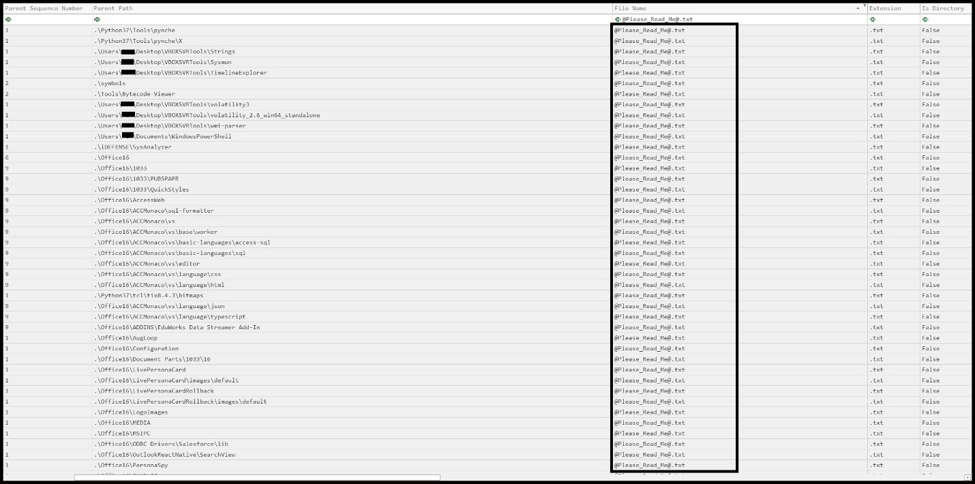
Ransom Note Distribution
File Name: @Please_Read_Me@.txt Locations:
Desktop
Documents
Downloads
AppData\Local
Multiple user directories
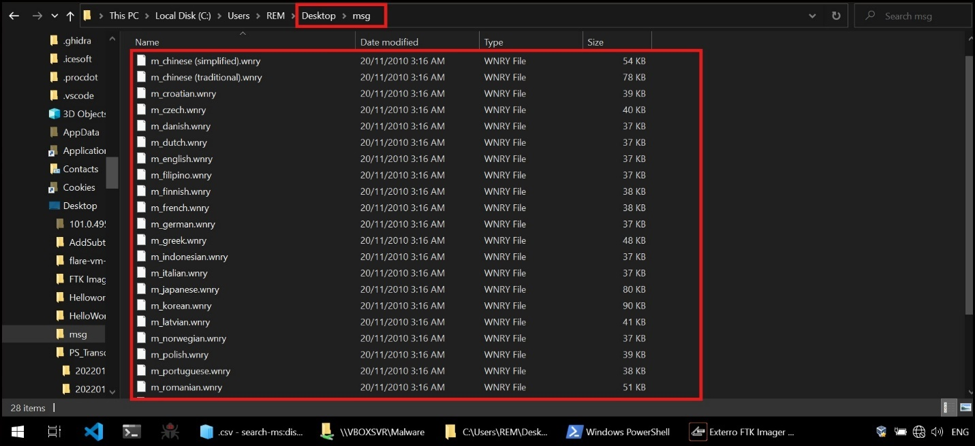
Multi-Language Support
Language Files Created:
Mass File Encryption
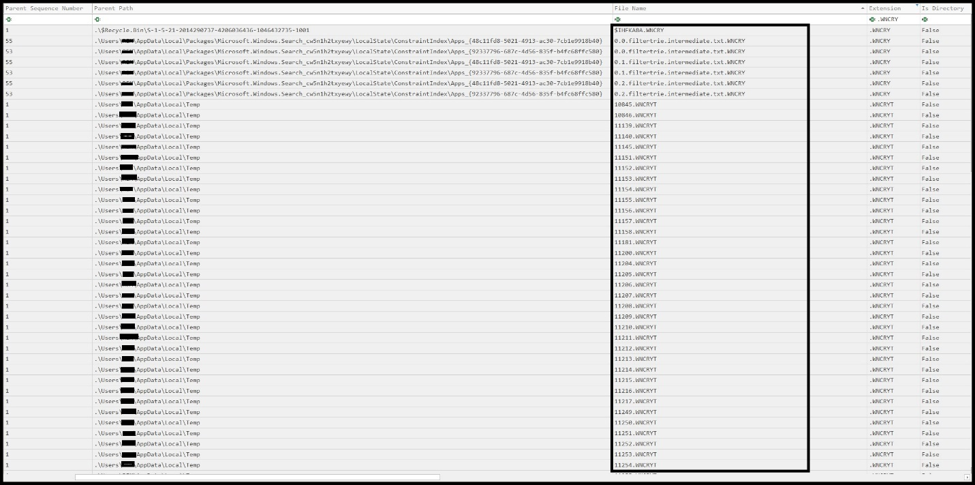
Encryption Pattern:
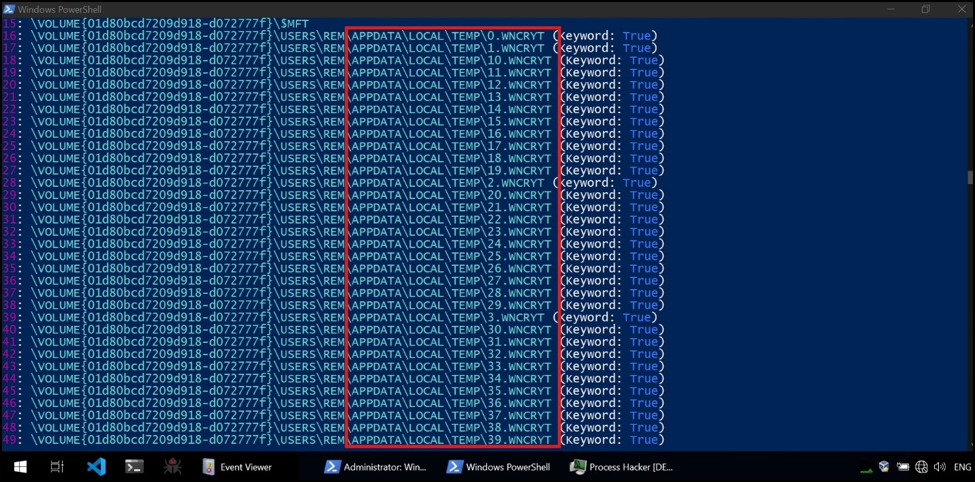
Extension Added: .WNCRYT Location: AppData\Local\Temp Files: 10845.WNCRYT → 11XXX.WNCRYT (sequential) Total Files: 10,000+ encrypted files Rate: 100 files per minute
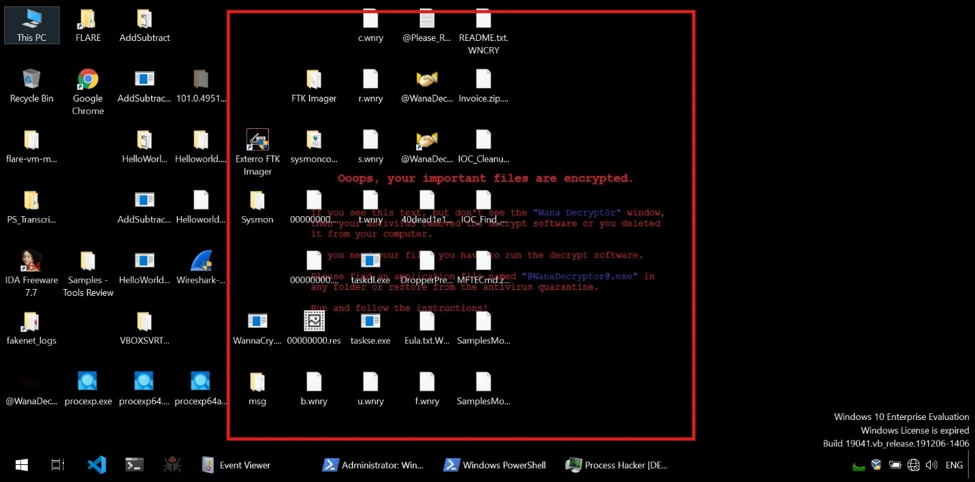
Desktop Wallpaper Change
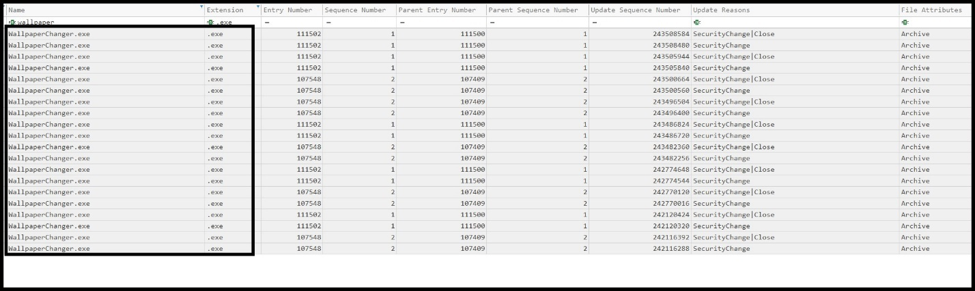
Process: WallpaperChanger.exe New Background: Black with red warning text Message: "Ooops, your important files are encrypted"
4. Registry Modifications
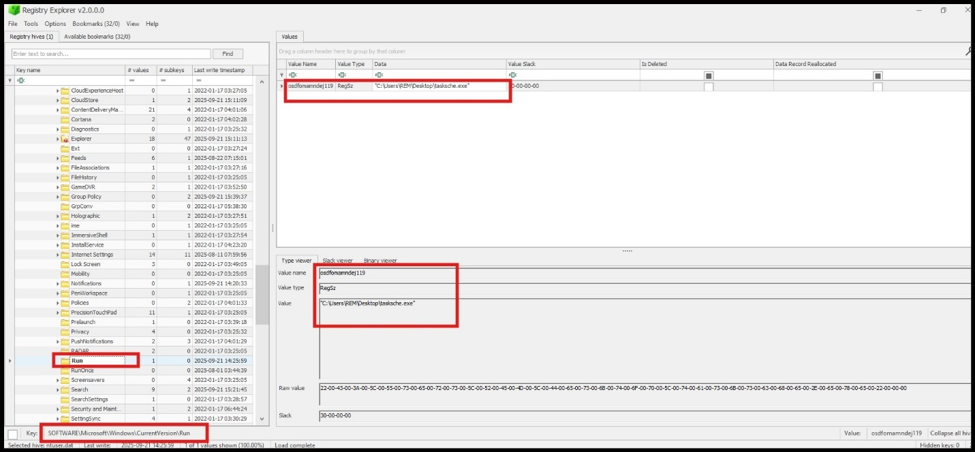
Persistence Mechanism
Registry Run Key:
Location: HKCU\Software\Microsoft\Windows\CurrentVersion\Run Value Name: osdfomamndej119 Value Data: C:\Users\REM\Desktop\tasksche.exe Purpose: Autostart on user login
File Association Hijacking
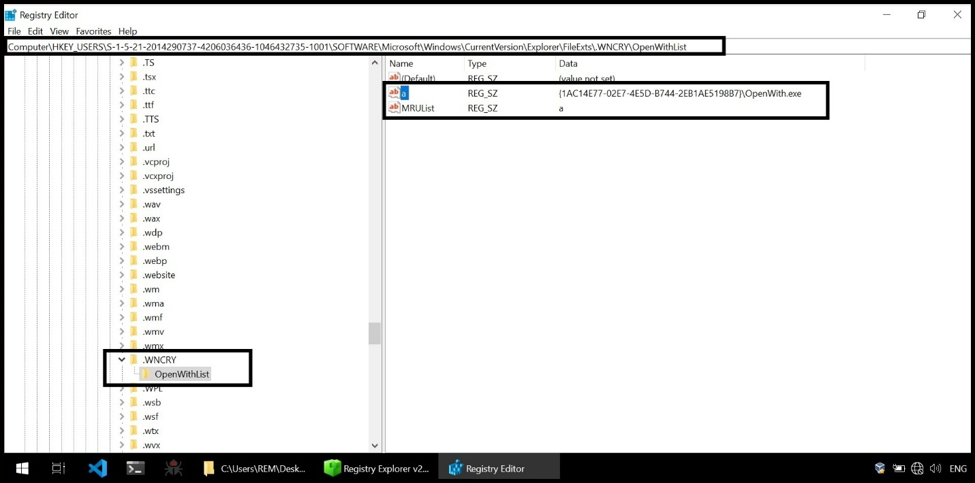
WNCRYT Extension Registration:
Registry Key: HKEY_USERS\ [SID]\SOFTWARE\Microsoft\Windows\CurrentVersion\Explorer\FileExts\.W NCRYT\OpenWithList Value: a Data: {1AC14E77-02E7-4E5D-B744-2EB1AE5198B7}\OpenWith.exe Result: .WNCRYT files open ransom interface
Configuration Storage
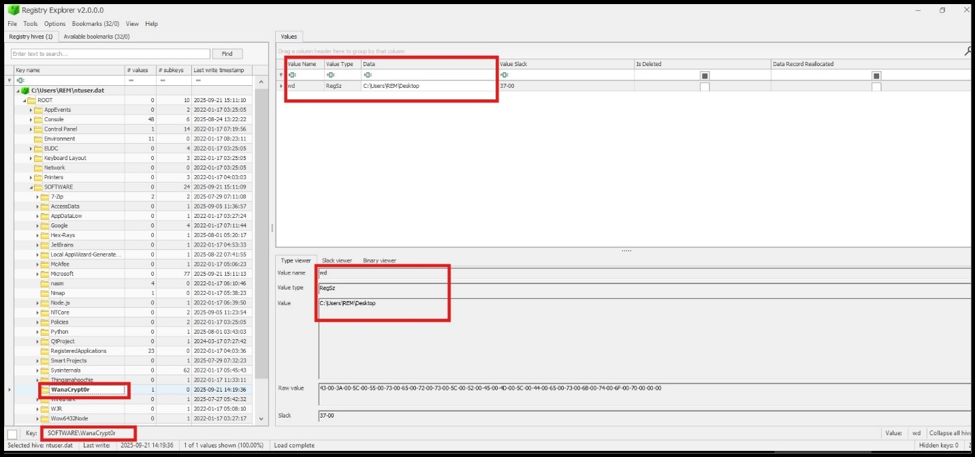
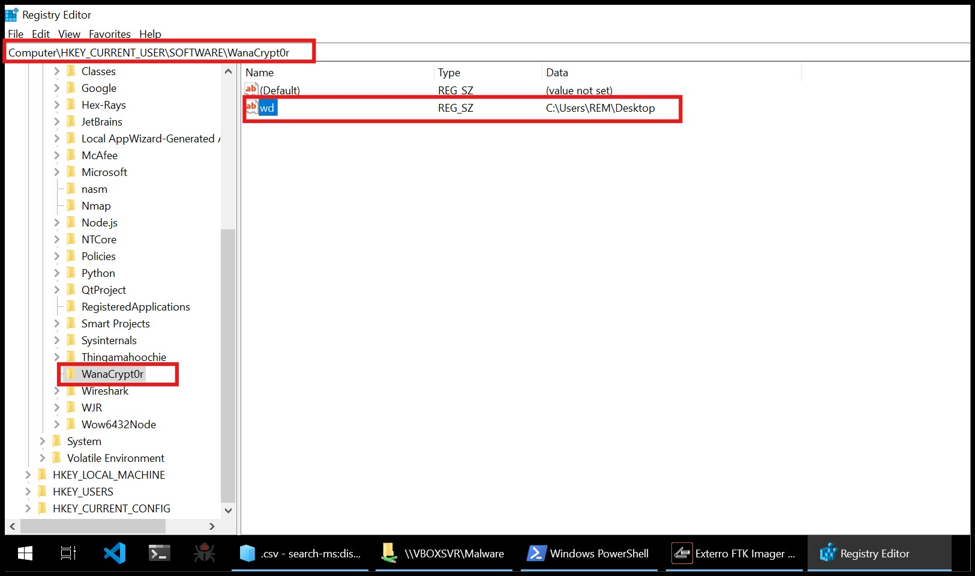
WanaCrypt0r Settings:
Registry: HKCU\SOFTWARE\WanaCrypt0r Value: wd (working directory)
Data: C:\Users\.\Desktop
Command and Control (C2) Traffic Analysis
Tor Network Infrastructure Usage
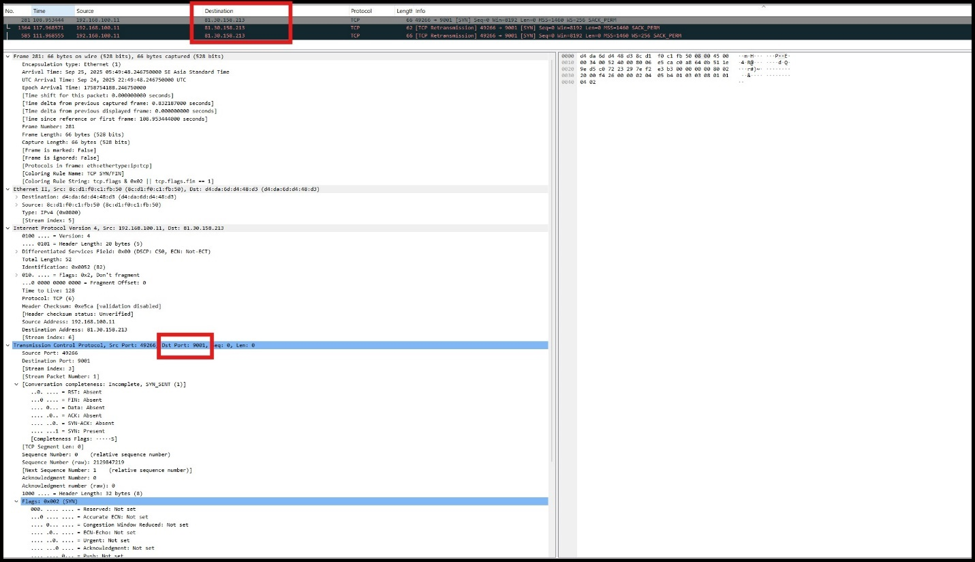
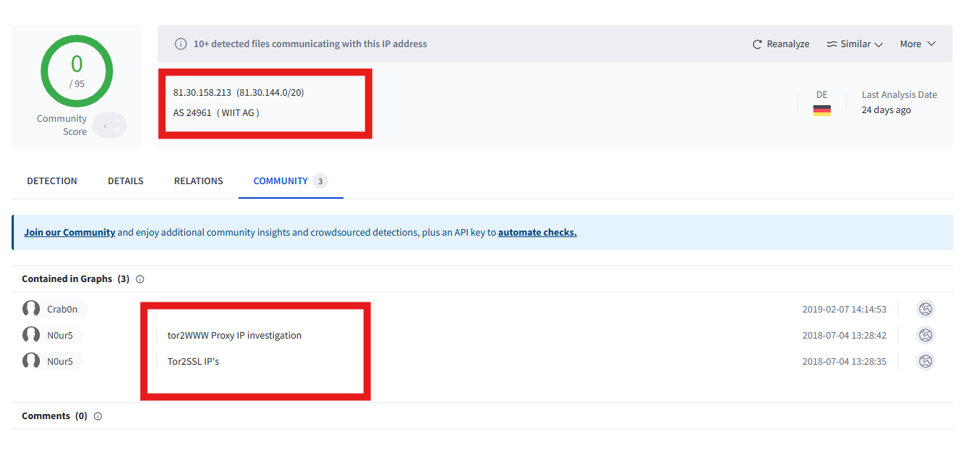
We triggered outbound TCP connections to 81.30.158.213:9001, indicating communication with Tor relay infrastructure on the standard Tor Directory Port.
The network traffic exhibited multiple connection attempts with distinct retransmission patterns, demonstrating persistent efforts to establish a command and control channel.
This behavior suggests the WannaCry variant was attempting to establish an anonymous communication channel for either command reception from threat actors or potential data exfiltration activities.
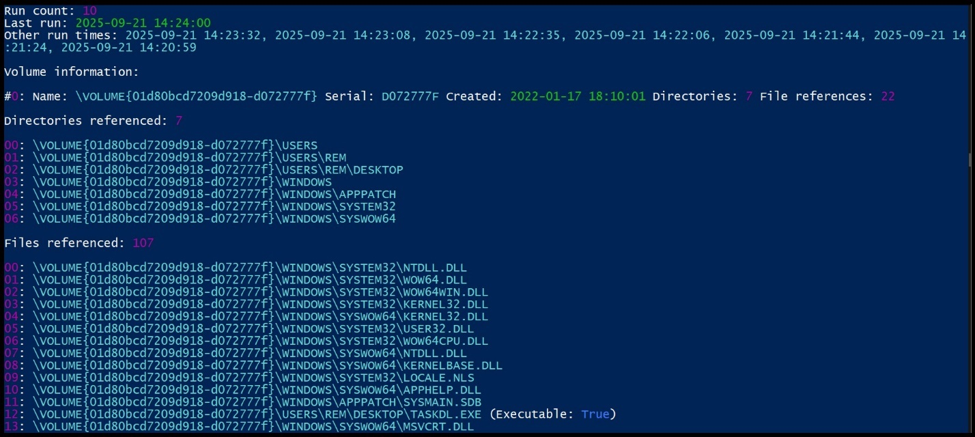
5. Prefetch Analysis
WannaCry Execution History
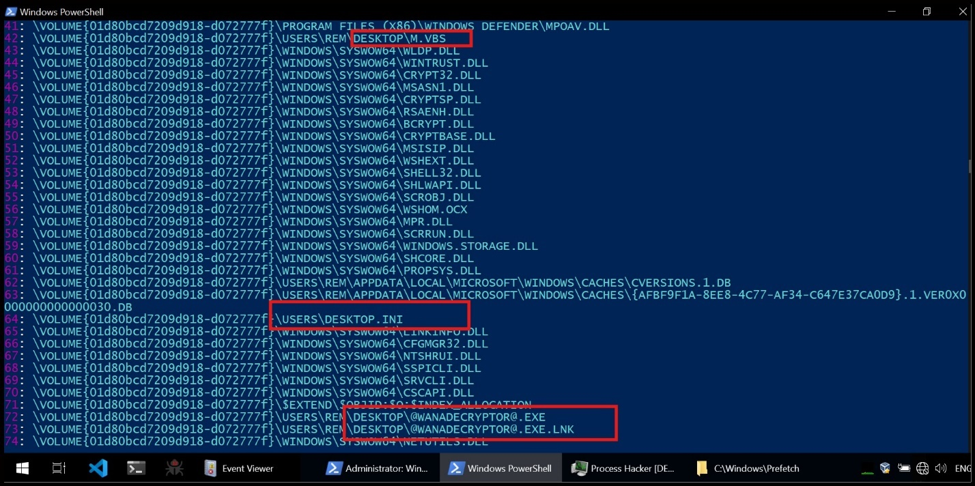
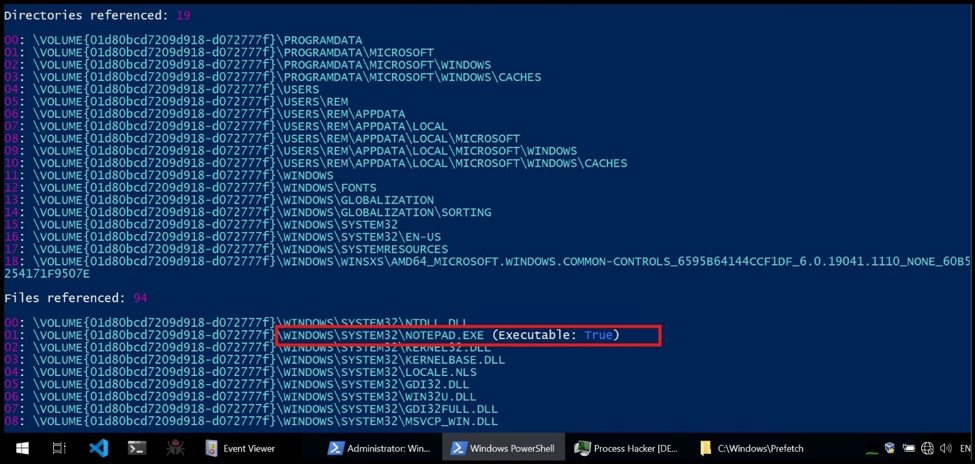
File: WANNACRY.EXE-.pf, CSCRIPT.EXE-.pf,TASKDL.EXE-.pf, NOTEPAD.EXE-pf
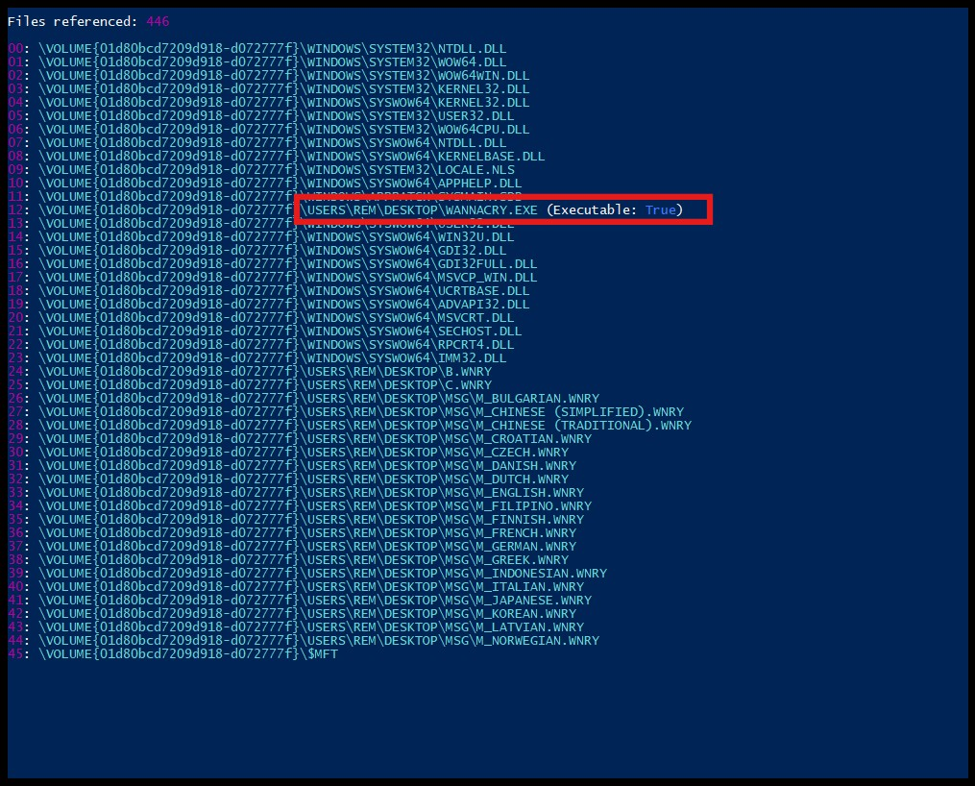
Run Count: 10 executions Previous Runs: 14:23:32, 14:23:08, 14:22:35, 14:22:06, 14:21:44 Volume Information: Name: \VOLUME{01d80bcd7209d918-d072777f} Directories Accessed: 84 Files Referenced: 446
Key Referenced Files:
\USERS\REM\DESKTOP\WANNACRY.EXE (Main executable)
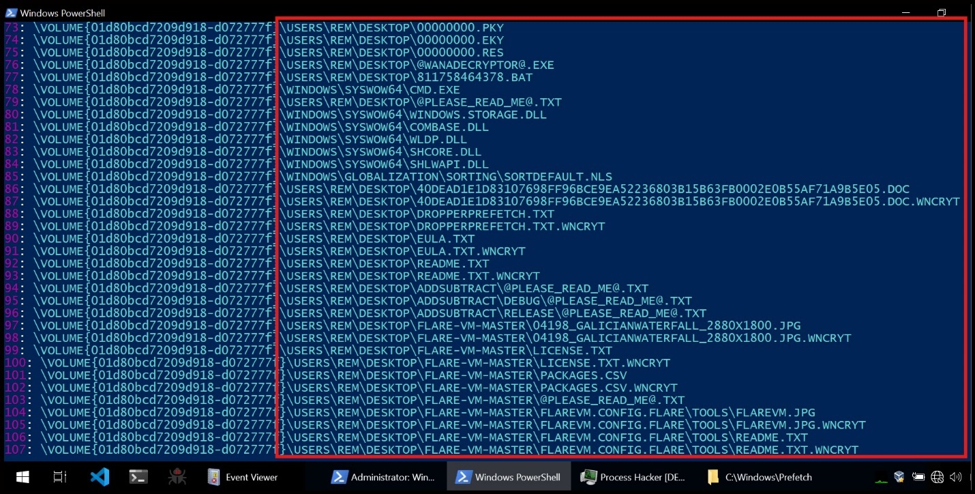
\WINDOWS\SYSWOW64\CMD.EXE (Command execution)
\WINDOWS\SYSWOW64\CSCRIPT.EXE (Script execution)
\WINDOWS\SYSTEM32\NOTEPAD.EXE (Ransom note display)
Command Execution Evidence
CMD.EXE Prefetch:
Referenced Command: C:\windows\system32\cmd.exe /c 811738464378.bat Purpose: Execute persistence batch file Files: Registry modification commands
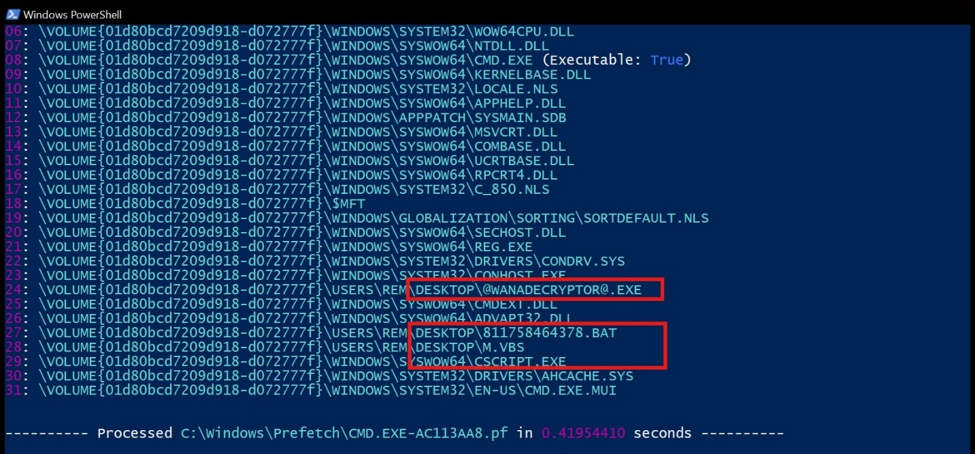
6. Memory Forensics Analysis
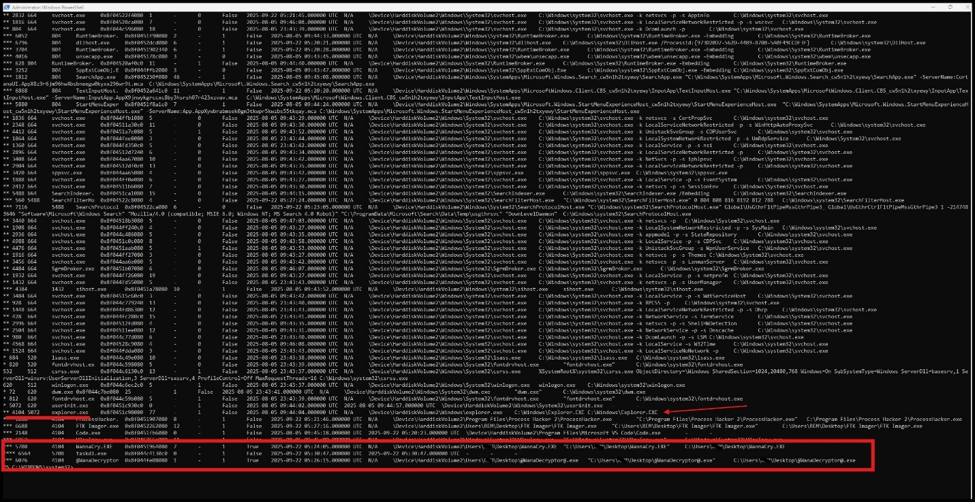
The initial malicious executable that created the process
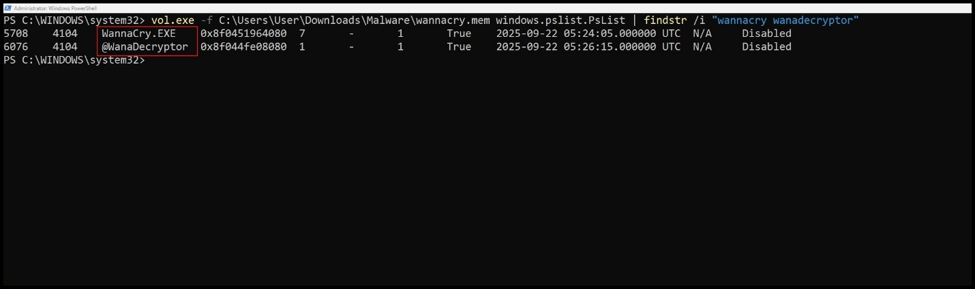
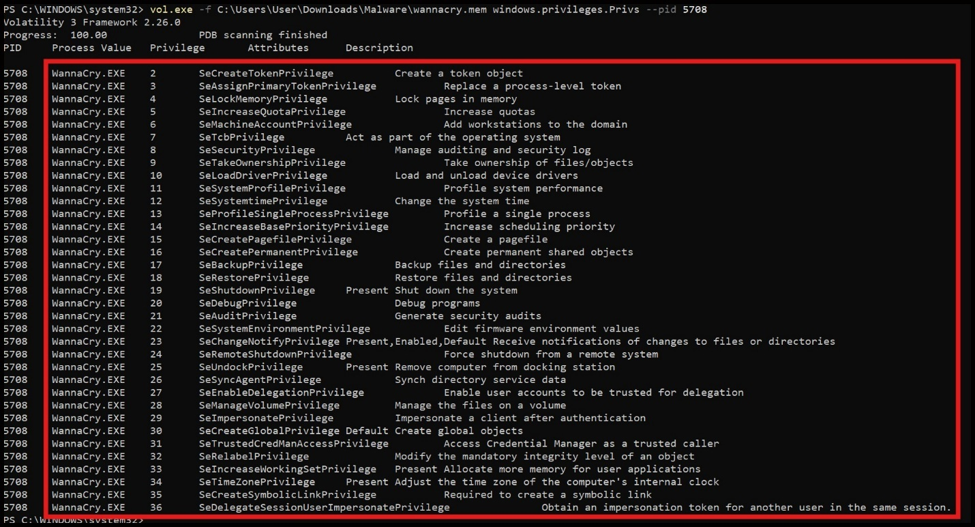
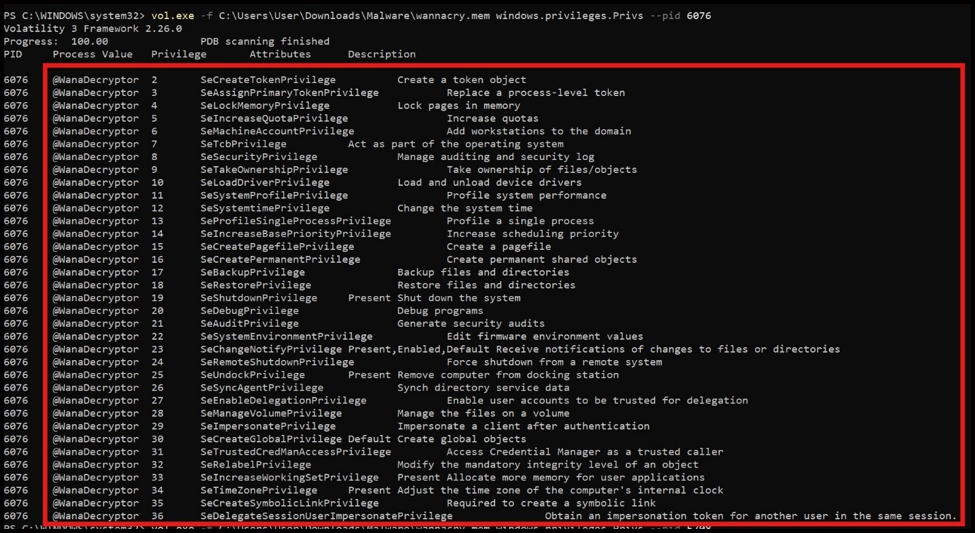
Process Privilege Escalation
WannaCry.EXE , @WanaDecryptor@.exe - 36 System Privileges:
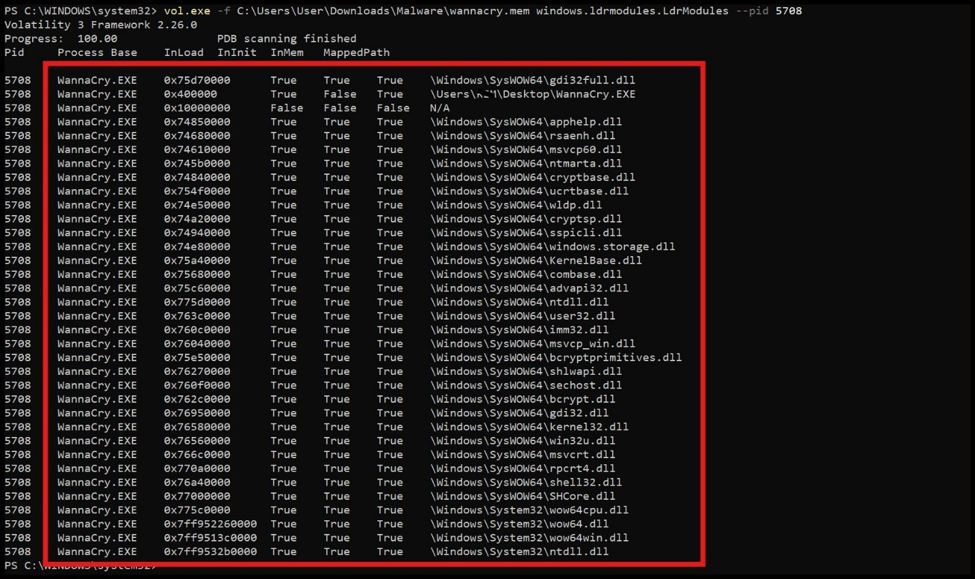
Loaded DLL Modules
WannaCry.EXE Memory Layout:
@WanaDecryptor DLL Loading:
Mutex Analysis
Name: Global\MsWinZonesCacheCounterMutexA0 ( WannaCry Ransomware well known mutex)

Indicators of Compromise (IOCs)
File Hashes
WannaCry.exe: ed01ebfbc9eb5bbea545af4d01bf5f1071661840480439c6e5babe8e080e41aa
Network Indicators
Kill-Switch Domain: www.iuqerfsodp9ifjaposdfjhgosurijfaewrwergwea.com
Bitcoin Address: 12t9YDPgwueZ9NyMgw519p7AA8isjr6SMw
Registry Keys
HKCU\Software\Microsoft\Windows\CurrentVersion\Run\osdfomamndej11 9 HKCU\SOFTWARE\WanaCrypt0r\wd
File Extensions & Names
Encrypted Files: .WNCRYT extension
Ransom Notes: @Please_Read_Me@.txt
Crypto Keys: 00000000.eky, 00000000.pky
Language Files: m_[language].wnry
Process Indicators
Mutex: Global\MsWinZonesCacheCounterMutexA0
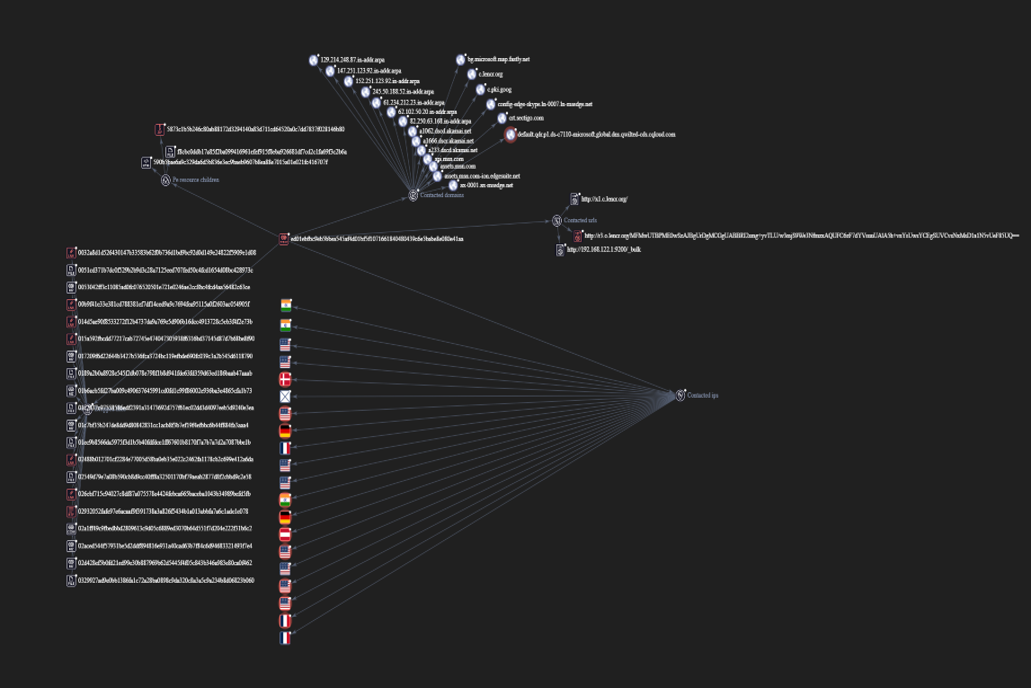
Ransomware Infrastructure Intelligence Driven
Observed infrastructure (high level)
Sample: the starting point is the WannaCry.exe SHA256 above.
Domains/URLs: the graph contains multiple domain nodes and URLs associated with the sample (used for kill-switch checks, potential payload hosting and possibly telemetry/C2). Kill-switch domain observed in analysis: www.iuqerfsodp9ifjaposdfjhgosurijfaewrwergwea.com (us ed by WannaCry family).
Remote IPs: the graph shows many contacted IPs (across multiple countries). These appear as C2/relay nodes and download hosts. (Export the graph to a CSV to get the authoritative list).
Network protocols / ports: evidence of DNS lookups, HTTP/HTTPS and standalone TCP connections (some captures show outbound connections to TCP ports such as 443 and other ephemeral/C2 ports).
Geographic distribution: flagged nodes show multiple country flags — infrastructure appears globally distributed (typical for resilient C2 and hosting).
Response & Mitigation
The following actions are organised by incident-response phase. Containment should preserve volatile evidence (memory) where forensic analysis is required, so isolate affected hosts at the network layer rather than powering them off.
Immediate Containment
Isolate infected hosts from the network (disable the switch port or pull the cable / disable Wi-Fi) without shutting them down, to halt propagation while preserving memory for forensics.
Allow the kill-switch domain (www.iuqerfsodp9ifjaposdfjhgosurijfaewrwergwea.com) to resolve internally — do NOT block it. Successful resolution neutralises this variant’s encryption routine.
Block SMB traffic (TCP 445) and disable SMBv1 across the environment to stop EternalBlue-style lateral movement; segment the network to contain spread.
Block the C2 indicator 81.30.158.213 and restrict outbound Tor traffic at the perimeter.
Identify the scope by hunting for the host indicators (mutex, Run key, .WNCRYT files, @Please_Read_Me@.txt) across the estate.
Eradication
Terminate malicious processes (WannaCry.exe, @WanaDecryptor@.exe, tasksche.exe, taskdl.exe, taskse.exe) and remove the mutex by killing the process tree.
Delete the persistence Run key HKCU\Software\Microsoft\Windows\CurrentVersion\Run\osdfomam ndej119 and remove the WanaCrypt0r configuration key HKCU\SOFTWARE\WanaCrypt0r.
Remove dropped artifacts: tasksche.exe, @WanaDecryptor@.exe, *.wnry, msg language files, ransom notes, and the .eky/.pky key files.
Where integrity cannot be assured, reimage affected systems from a known-good build rather than cleaning in place. Recovery
Restore encrypted data from known-good, offline or immutable backups after confirming the environment is clean.
Apply the MS17-010 security update and confirm SMBv1 is disabled before returning hosts to production.
Reset credentials that may have been exposed on affected hosts and monitor restored systems closely for recurrence.
Do not pay the ransom; payment does not guarantee recovery and funds further criminal activity. Engage legal and, where appropriate, law enforcement.
Recommendations
Preventive Controls
Maintain timely patching, prioritising MS17-010 / EternalBlue, and remove SMBv1 from all systems.
Block inbound/outbound TCP 445 and 139 at the perimeter and enforce internal network segmentation.
Deploy and tune EDR with behavioural ransomware detection (mass file modification, shadow-copy deletion, suspicious child-process chains).
Enforce least privilege and application allow-listing to limit execution of unauthorised binaries and scripts.
Strengthen email and web gateways and deliver user-awareness training, since user execution is the common entry point.
Detection Rules
The following rule is derived directly from the indicators of compromise documented in this report. They are intended for detection and threat-hunting; validate and tune thresholds in a test environment before production deployment.
YARA Rule — WannaCry Ransomware
rule WannaCry_Ransomware
{
    meta:
        description    = "Detects WannaCry / WanaCrypt0r 2.0 ransomware components"
        author         = "Chilai"
        date           = "2026-06-23"
        reference      = "Internal WannaCry Investigation Report"
        malware_family = "WannaCry"
        sha256         = "ed01ebfbc9eb5bbea545af4d01bf5f1071661840480439c6e5babe8e080e41aa"
        tlp            = "CLEAR"
    strings:
        $killswitch = "iuqerfsodp9ifjaposdfjhgosurijfaewrwergwea" ascii wide nocase
        $mutex      = "Global\\MsWinZonesCacheCounterMutexA0"      ascii wide
        $reg        = "WanaCrypt0r" ascii wide nocase
        $note       = "@Please_Read_Me@.txt" ascii wide
        $decryptor  = "@WanaDecryptor@.exe" ascii wide
        $btc        = "12t9YDPgwueZ9NyMgw519p7AA8isjr6SMw" ascii wide
        $msg        = "Ooops, your files have been encrypted"      ascii wide
        $magic      = "WANACRY!" ascii
        $hdr        = "WNcry@2ol7" ascii
        $ext1       = ".wnry" ascii wide nocase
        $ext2       = ".WNCRYT" ascii wide nocase
    condition:
        uint16(0) == 0x5A4D and filesize < 15MB and
        (
            any of ($magic, $hdr) or
            2 of ($killswitch, $mutex, $reg, $note, $decryptor, $btc, $msg) or
            (any of ($ext1, $ext2) and 1 of ($mutex, $reg, $note, $decryptor))
        )
}
Sigma Rule
title: WannaCry Ransomware Activity
id: a3596906-0ec6-471f-b539-551fe3696eea
status: stable
description: Detects WannaCry / WanaCrypt0r 2.0 ransomware components
references:
    - Internal Research
author: Chilai
date: 2026-06-23
tags:
    - attack.lateral-movement
    - attack.defense-impairment
    - attack.t1210
    - attack.discovery
    - attack.t1083
    - attack.t1222.001
    - attack.impact
    - attack.t1486
    - attack.t1490
logsource:
    category: process_creation
    product: windows
detection:
    selection_img:
        - Image|endswith:
              - '\tasksche.exe'
              - '\mssecsvc.exe'
              - '\taskdl.exe'
              - '\taskhsvc.exe'
              - '\taskse.exe'
              - '\111.exe'
              - '\lhdfrgui.exe'
              - '\linuxnew.exe'
              - '\wannacry.exe'
        - Image|contains: 'WanaDecryptor'
    selection_cmd:
        CommandLine|contains: '@Please_Read_Me@.txt'
    condition: 1 of selection_*
falsepositives:
    - Unknown
level: critical
Research By Phyo Paing Htun ( ChiLai )