Shadow Injection: How PlugX Evades Detection Without Persistence Artifacts
Introduction
A newly observed PlugX variant demonstrates a notable shift in tradecraft, moving away from traditional persistence and execution patterns commonly associated with this malware family. Unlike previously documented variants that rely on registry modifications or scheduled tasks, this sample operates with a lighter footprint and emphasizes stealth over persistence. Its behavior suggests a deliberate effort to evade host- based detection and forensic analysis, indicating continued evolution in PlugX’s operational design.
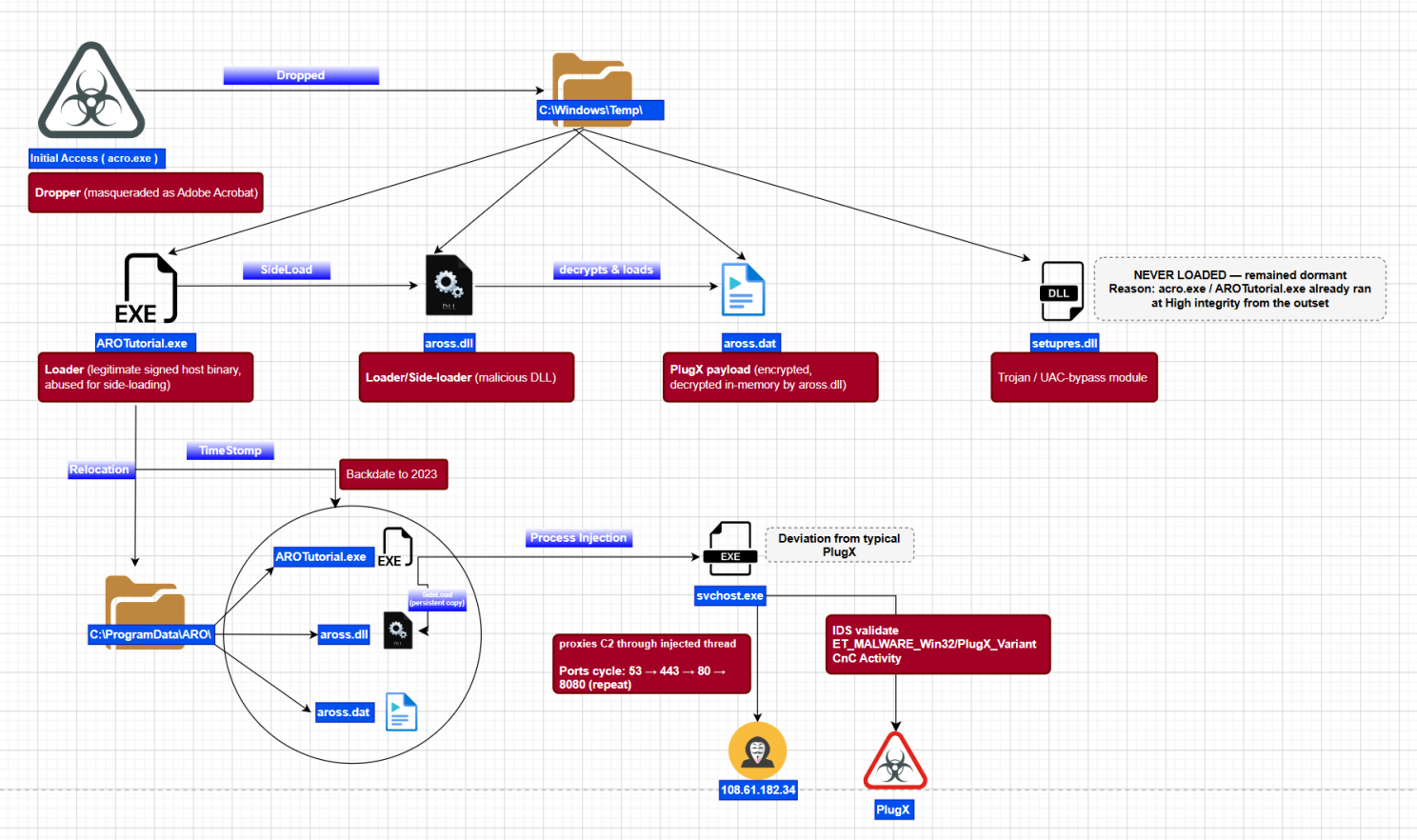
Attack-Flow
Technical Analysis
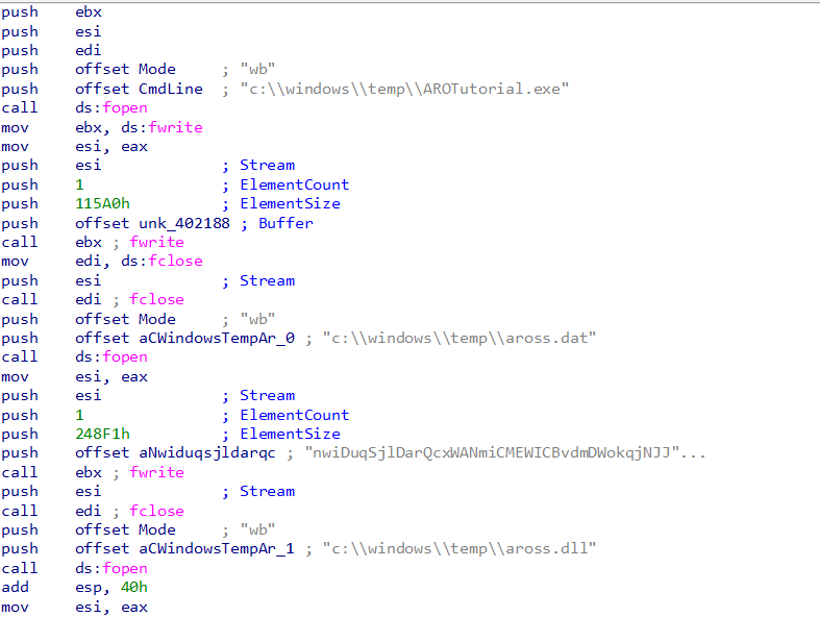
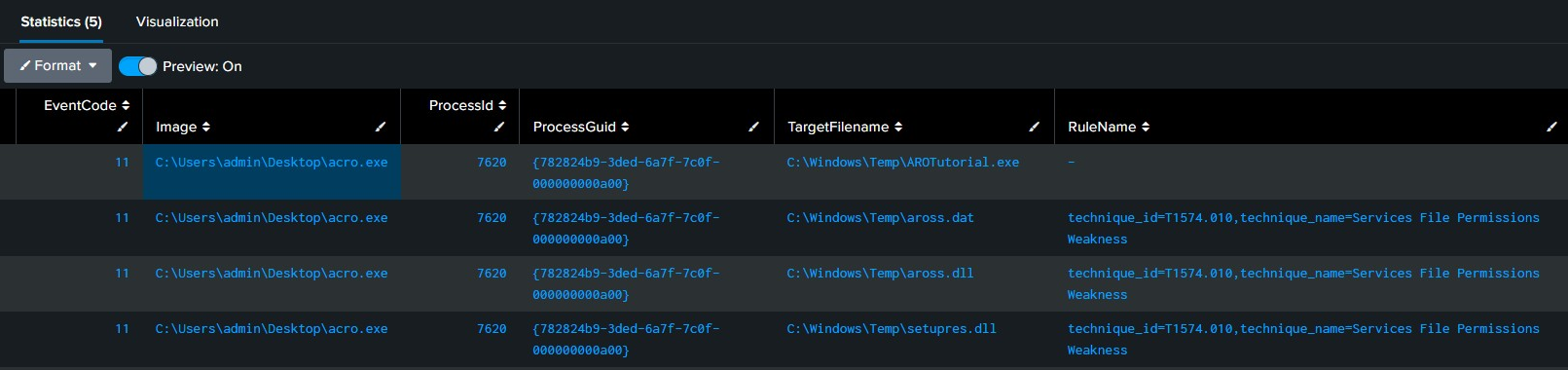
The dropper, acro.exe, deployed multiple files into the Windows temporary directory as part of its execution chain. The main executable “AROTutorial.exe” carried metadata linked to Support.com’s ARO (Advanced Registry Optimizer) tutorial, a legitimate application. This suggests intentional masquerading to appear trustworthy. By imitating a known product, the malware reduces suspicion and improves its chances of successful execution. This technique aligns with common PlugX tradecraft focused on evasion and blending into normal system activity.
- c:\windows\temp\AROTutorial.exe legitimate signed/abused executable
- c:\windows\temp\aross.dat Encrypted PlugX payload (decoded in memory)
- c:\windows\temp\aross.dll Malicious loader
- c:\windows\temp\setupres.dll UAC bypass capability module
The payload deploys a dormant UAC bypass component (setupres.dll) that was not utilized during this execution due to the initial process already running with High-integrity (elevated) privileges.
The artifact remains resident on the host filesystem. It serves as a conditional elevation mechanism that triggers automatically if the malware is executed within a low-privilege context on a different host or session.
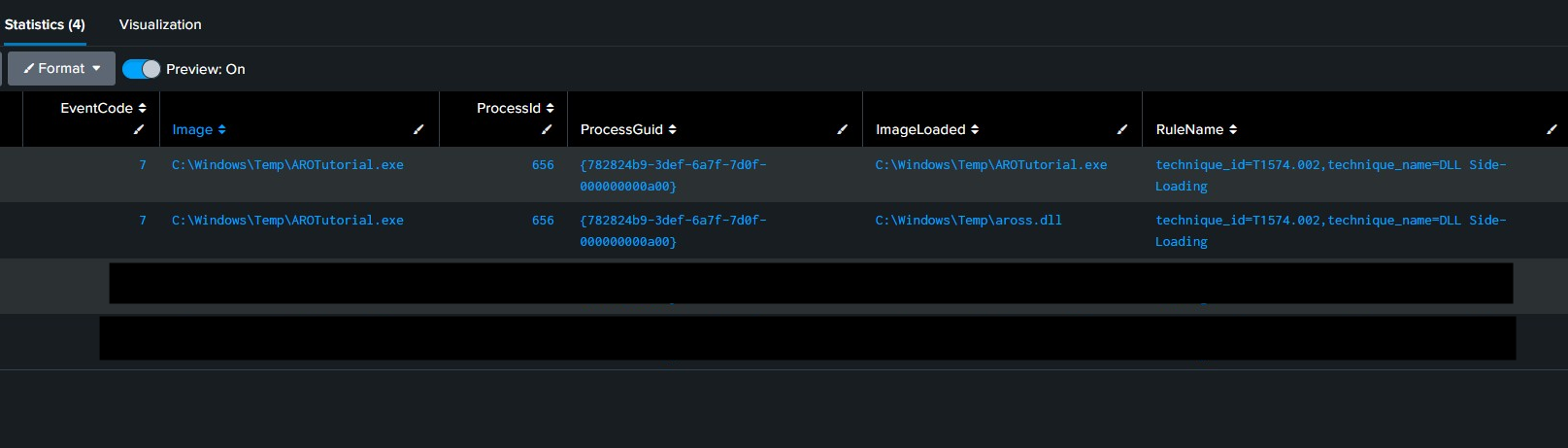
Malicious DLL Side-Loading
AROTutorial.exe executed under the same security context as acro.exe, and subsequently initiated DLL side-loading by loading aross.dll to continue the execution chain.
aross.dll is assessed to be responsible for decrypting aross.dat and loading the resulting PlugX payload into memory at this point.
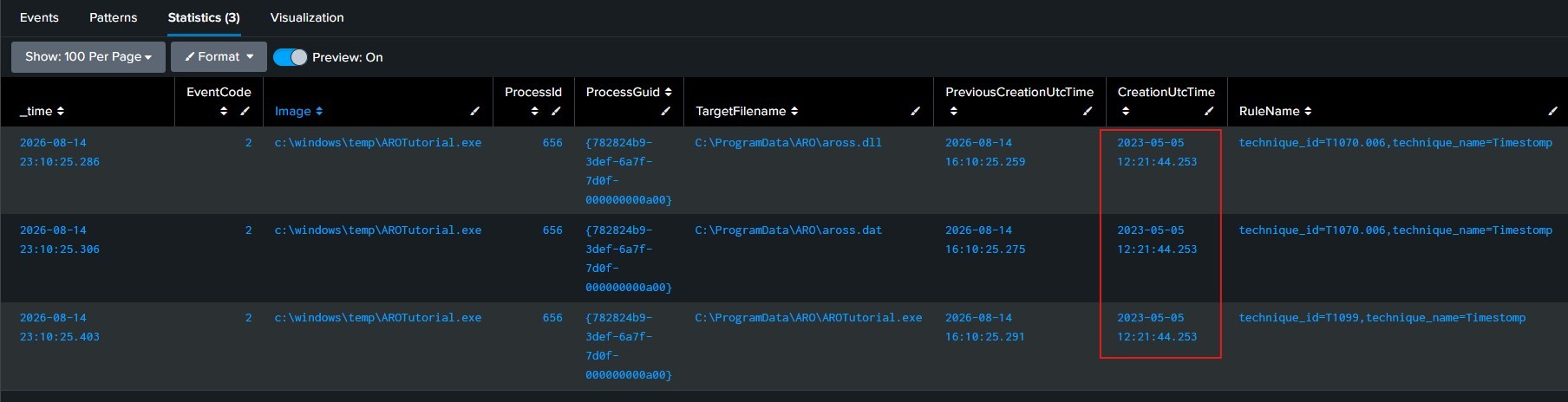
Timestomping
AROTutorial.exe, originating from the Temp staging directory, moved its toolkit to C:\ProgramData\ARO\ and applied uniform backdated timestamps (2023, as shown in the figure) across all transferred files, consistent with anti-forensic behavior aimed at disrupting timeline-based analysis.
Staging Transition from Temp to ProgramData
Artifacts indicate a two-stage DLL side-loading workflow. The malware first executes from a Temp-based staging directory to achieve rapid, user- context execution, using it as a transient launch point.
It then relocates its toolkit to C:\ProgramData\ and re-establishes the side-loading chain. This reflects a shift from volatile staging to a more persistent operational directory, which is less likely to be monitored or cleared compared to Temp and better suited for long-term execution.
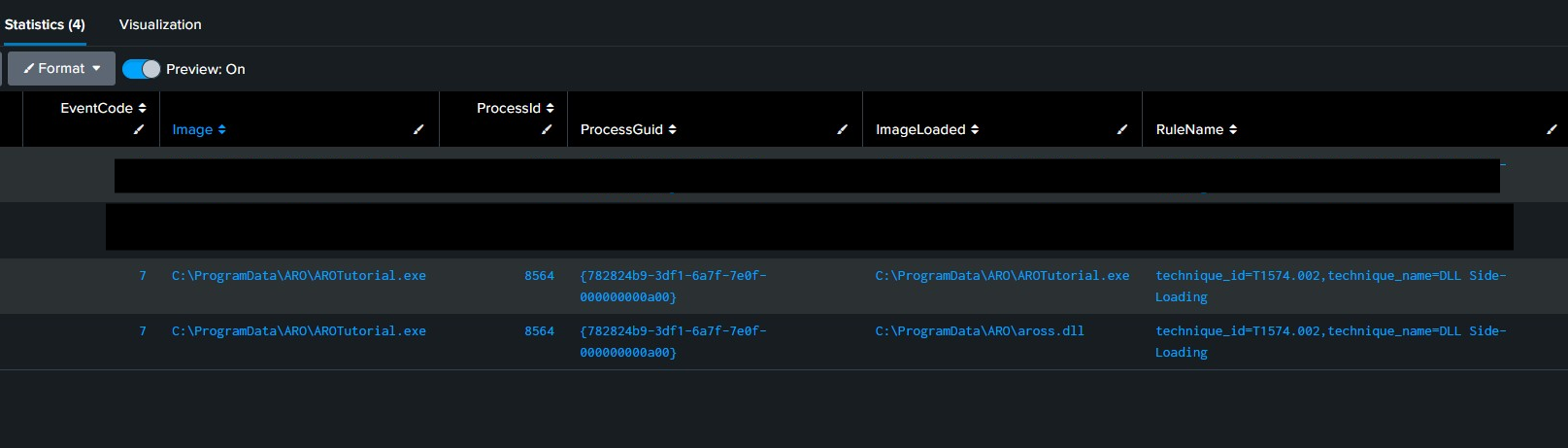
Overall, this behavior shows a structured staging progression from initial deployment to persistent re-execution in a more stable Windows location.
Loader Artifacts
The plugx loader implements a layered anti-forensic strategy; it applies UPX compression to obfuscate the Import Address Table (IAT) and file structure at rest.

The exported function DisplayAROTutorial invokes sub_10001900, which facilitates reading the payload from aross.dat and loading it into memory using standard Windows APIs (CreateFileA, GetModuleFileNameA, and VirtualAlloc).
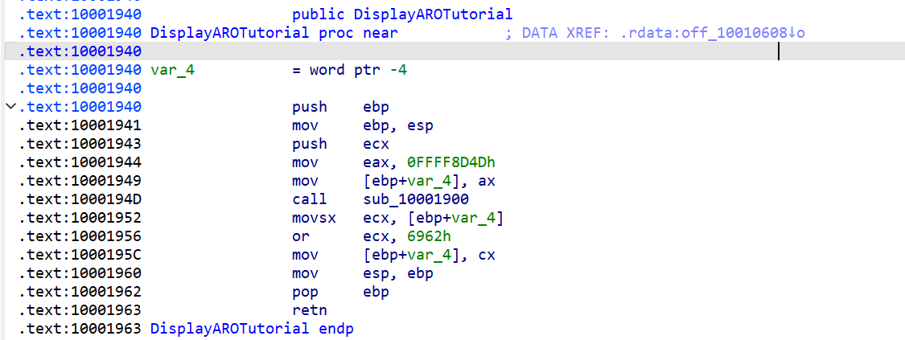
Static Signature Evasion Techniques
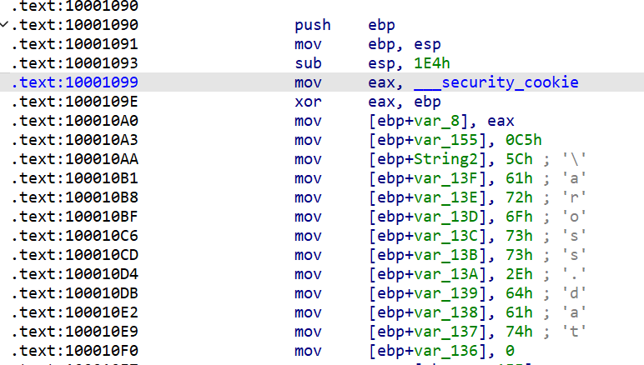
Stack-string construction: the malware builds "\aross.dat" one byte at a time via individual mov instructions instead of using a static string in .data. There's no static string to find. This is a deliberate anti-string-scanning technique (defeats basic static AV/YARA string signatures and casual strings.exe runs)
Process Injection for C2 Channel Establishment
Rather than beaconing directly from the side-loaded process, as commonly observed in many PlugX variants, this sample escalates execution by injecting into a legitimate svchost.exe process and routing all C2 communications through it.

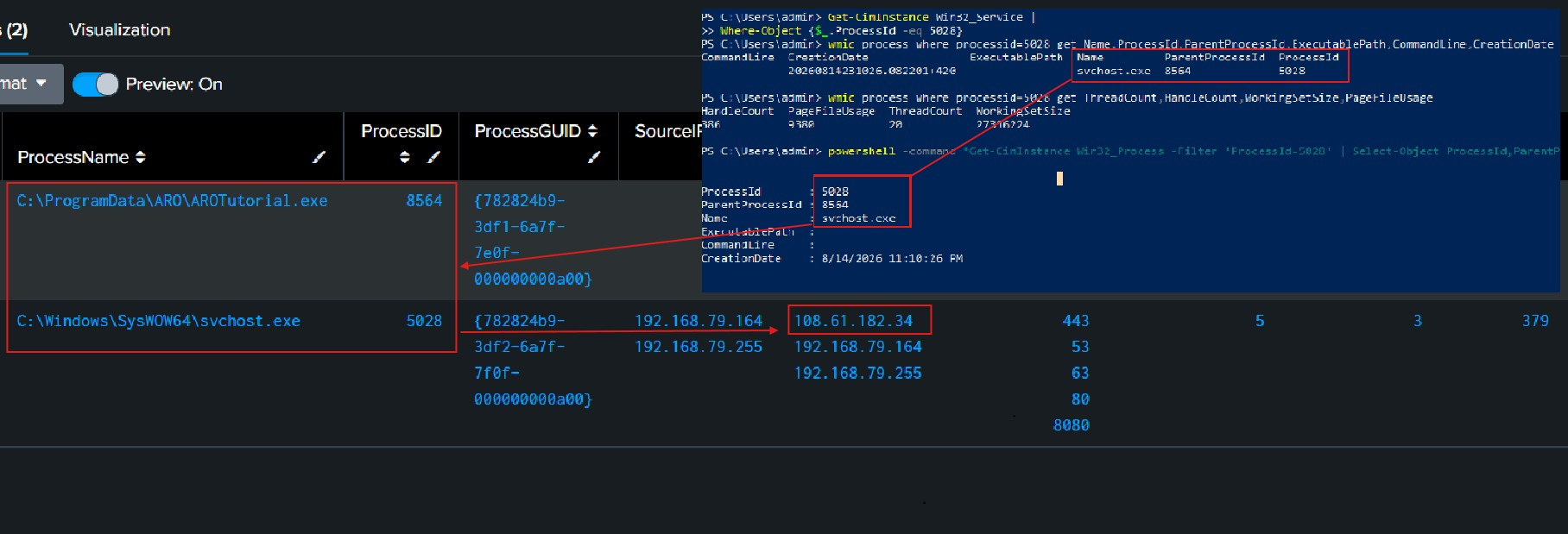
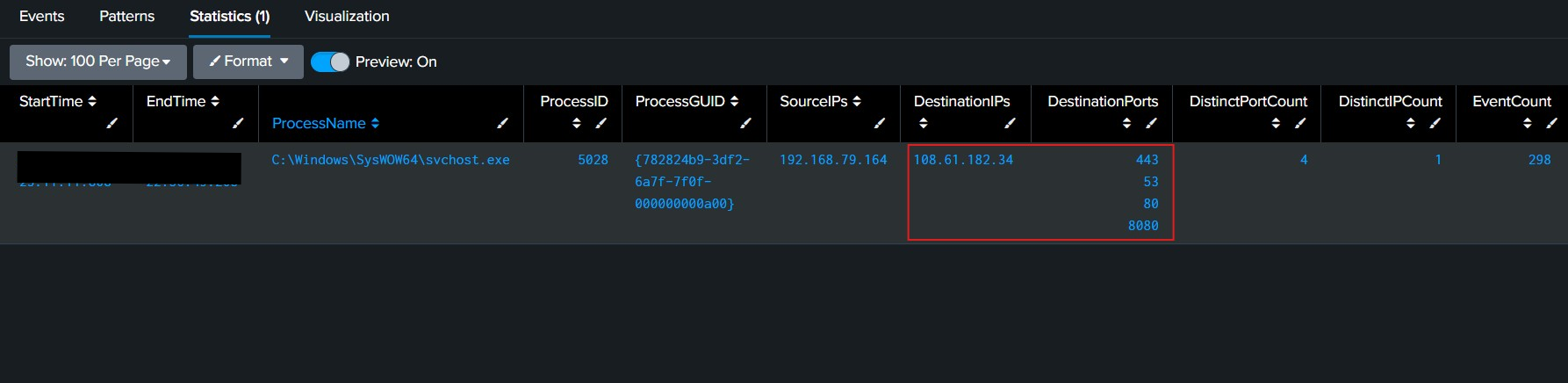
Network telemetry indicates that following the injection event, svchost.exe initiated outbound C2 beaconing restricted to a single indicator of compromise (IOC), specifically IP 108.61.182.34.
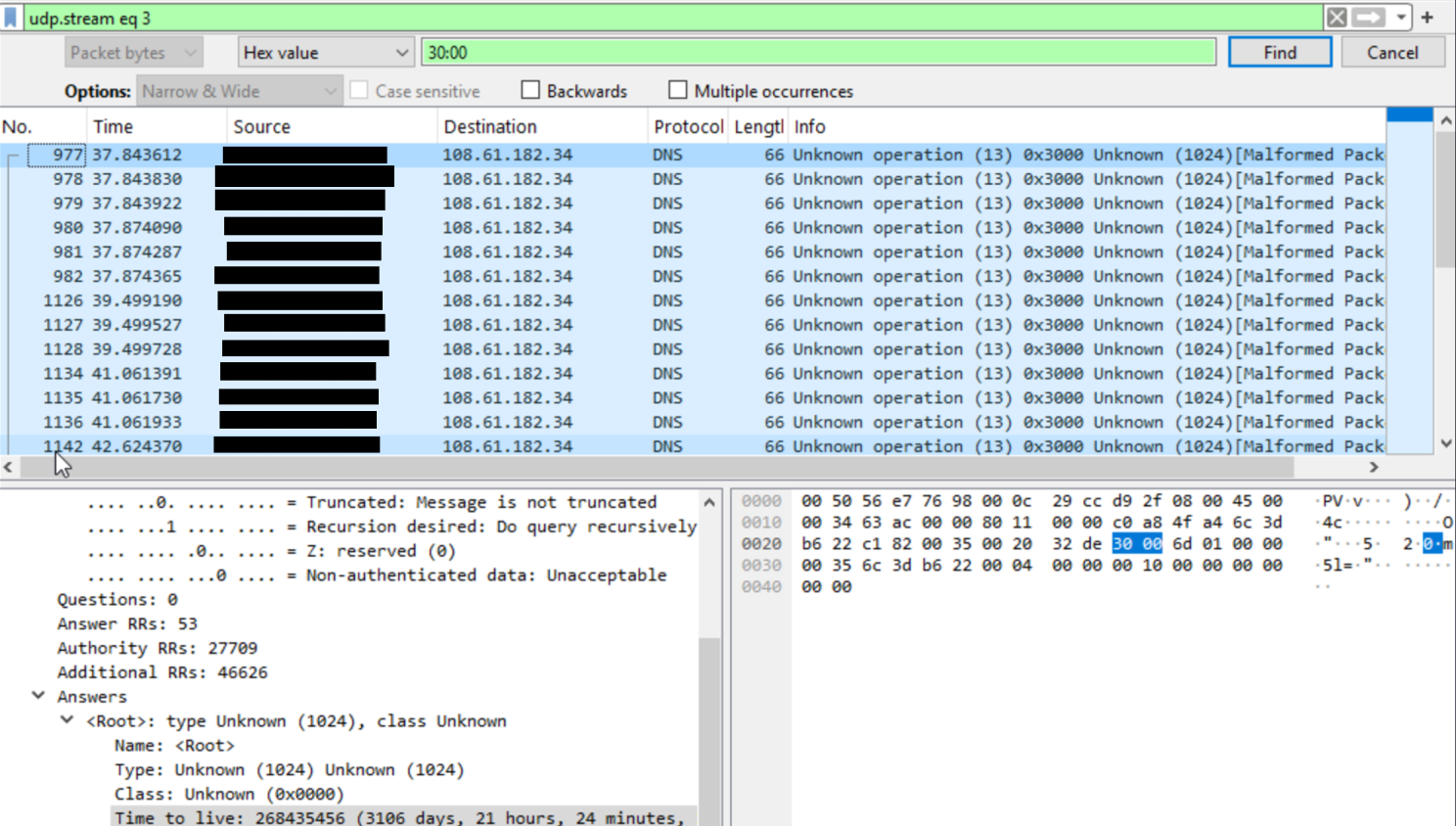
IDS Detection - Confirmed PlugX Signature Match
A Suricata ruleset (Emerging Threats) match was triggered against this traffic and independently confirmed by manually pulling the rule definition:
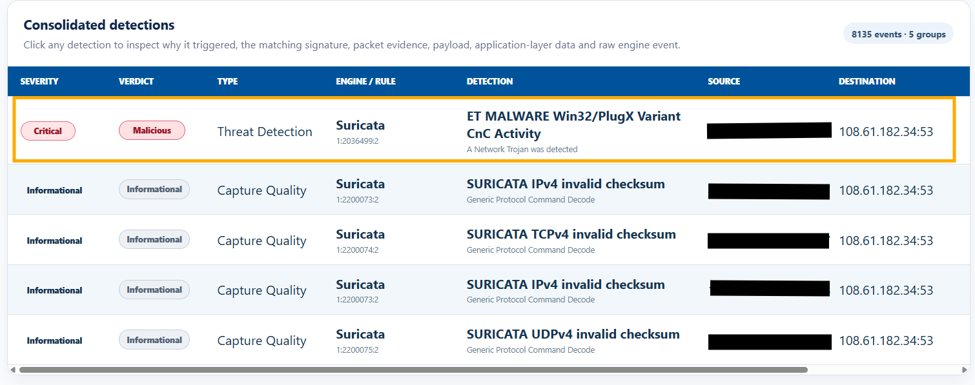
This byte-for-byte analysis confirms the Suricata detection is not a false positive: every condition in the rule is independently reproducible directly from the raw packet capture.
Indicators
- C2 IP: 108.61.182.34
- C2 Reverse DNS: 108.61.182.34.vultrusercontent.com
- C:\Users\admin\Desktop\acro.exe
- C:\Windows\Temp\AROTutorial.exe
- C:\Windows\Temp\aross.dat
- C:\Windows\Temp\aross.dll
- C:\Windows\Temp\setupres.dll
- C:\ProgramData\ARO\AROTutorial.exe
- C:\ProgramData\ARO\aross.dll
- C:\ProgramData\ARO\aross.dat
- acro.exe – SHA256: 80deed939a520696968335d1bb2a9fcce7053c0156f679ba261824d0a2d44967
- AROTutorial.exe – SHA256: 18a98c2d905a1da1d9d855e86866921e543f4bf8621faea05eb14d8e5b23b60c
- aross.dat – SHA256: c5dcd3073904fad5d9a8fe1026141a832e05c9ca03a88fee96587921f42773d4
- aross.dll (packed) – SHA256: f78bf6711b6f3f24573f2a22804f33cec6741f3f2db449410fa37430021080ab
- across.dll – SHA 256: AAF9633867FE19F46D85BDF4A8D34738F427DF2CC48AD2FE9EC340D99049D501
- setupres.dll - SHA256: 7863ad82f7e1c036e48e928433932177a14670033028b42f44dafeacb40a86a9
Detection Opportunities
Suricata
alert udp $HOME_NET any -> any ![80,443] (msg:"ET MALWARE Win32/PlugX Variant CnC Activity"; dsize:24; content:"|30 00|"; startswith; content:"|00 04 00 00 00 10 00 00 00 00 00 00|"; distance:9; fast_pattern; endswith; threshold:type limit, count 1, seconds 120, track by_src; reference:url,www.trendmicro.com/en_us/research/22/d/new-apt-group-earth-berberoka-targets-gambling-websites-with-old.html; classtype:trojan-activity; sid:2036499; rev:2; metadata:attack_target Client_Endpoint, created_at 2022_05_05, deployment Perimeter, deployment Internal, malware_family Win32_DLOADR_TIOIBEPQ, performance_impact Low, confidence High, signature_severity Major, tag Description_Generated_By_Proofpoint_Nexus, updated_at 2023_08_23;)MDE Queries (Suspicious CreateRemoteThread into svchost.exe from a non-system parent)
DeviceEvents
| where ActionType == "CreateRemoteThreadApiCall"
| where InitiatingProcessFileName !in~ ("services.exe", "wininit.exe", "svchost.exe", "System", "csrss.exe")
| where FileName =~ "svchost.exe"
| project Timestamp, DeviceName, InitiatingProcessFileName, InitiatingProcessFolderPath, InitiatingProcessId, FileName, FolderPath, ProcessId, AdditionalFields
MDE Queries (AROTutorial.exe DLL side-loading (aross.dll))
DeviceImageLoadEvents
| where InitiatingProcessFileName =~ "AROTutorial.exe"
| where FileName =~ "aross.dll"
| project Timestamp, DeviceName, InitiatingProcessFileName, InitiatingProcessFolderPath, InitiatingProcessId, FileName, FolderPath, SHA256
MDE Queries (File creation timestamp anomaly under ProgramData)
DeviceFileEvents
| where ActionType == "FileCreated"
| where FolderPath startswith @"C:\ProgramData\"
| where FileName has_any (".exe", ".dll", ".dat")
| extend CreationToIngestDeltaHours = datetime_diff("hour", Timestamp, ingestion_time())
| where CreationToIngestDeltaHours > 24
| project Timestamp, DeviceName, FolderPath, FileName, SHA256, InitiatingProcessFileName
MITRE ATT&CK
- User Execution T1204
- Masquerading T1036
- DLL Side-Loading T1574.002
- Services File Permissions Weakness T1574.010
- Indicator Removal: Timestomp T1070.006
- Abuse Elevation Control Mechanism: Bypass UAC (present, unexercised) T1548.002
- Process Injection T1055
- Application Layer Protocol T1071
- Non-Standard Port T1571
- Protocol Impersonation / DNS Tunneling T1071.004
Analysis and reporting completed by Kyaw Pyiyt Htet (Mikoyan) and PHYO P.