MOFA in the Crosshairs: Mustang Panda’s ToneShell Phishing Campaign
Kyaw Pyiyt Htet (Mikoyan) ·
Analysis Date: September 7, 2025
Classification: TLP:WHITE
Type: Advanced Persistent Threat (APT)
Sample: Call Notes.zip";filename*=UTF-8''Call%20Notes.zip (ToneShell Variant)
Threat Actor: Mustang Panda
Campaign: Myanmar Government-Themed Spear-Phishing Operation
Executive Summary
Campaign Overview
This analysis documents an active Mustang Panda operation utilizing sophisticated spear-phishing to target government and diplomatic personnel through fraudulent communications masquerading as official Myanmar Ministry of Foreign Affairs correspondence. The campaign demonstrates significant tactical evolution while maintaining the group's signature DLL sideloading methodology.
Key Finding
Our investigation identified command-and-control (C2) infrastructure at “146.70.29.229” overlap with our earlier publication “Mustang Panda’s PlugX ToneShell Targeting TNLA in Myanmar.” In this campaign, the malware employs DLL sideloading, where MediumInstStart.exe (associated with Solid PDF Creator) loads SolidPDFCreator.dll to enable extensive system access under the guise of legitimate PDF software. Compilation timestamps from September 2025 highlight continued development and operational activity, underscoring the actor’s sustained investment in maintaining this campaign.
Malware Execution Flow
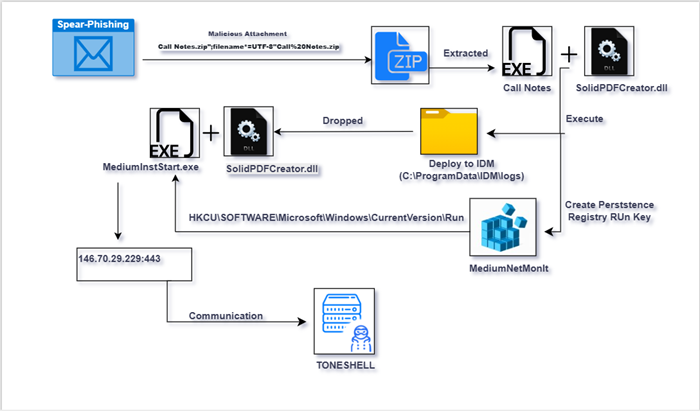
Attack Chain Overview
Introduction
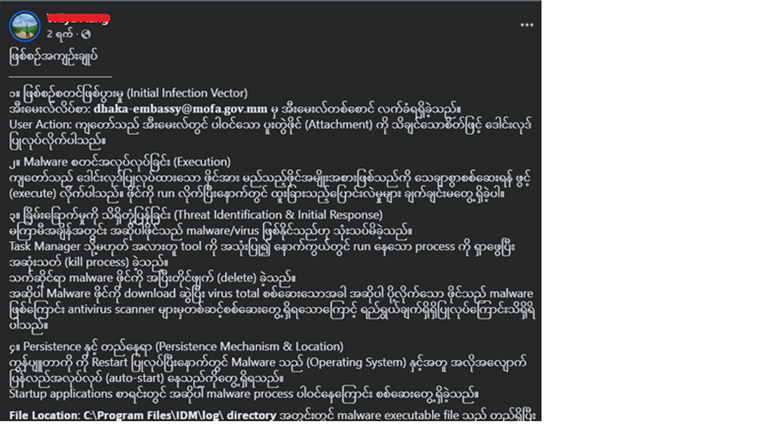
This research originates from a user-reported incident in which a spear-phishing email was received and publicly shared on Facebook. The email, spoofing the Myanmar Ministry of Foreign Affairs with the sender address 𝐝𝐡𝐚𝐤𝐚-𝐞𝐦𝐛𝐚𝐬𝐬𝐲@𝐦𝐨𝐟𝐚.𝐠𝐨𝐯.𝐦𝐦, contained a malicious attachment crafted to appear as legitimate PDF content. Interaction with the attachment triggered the download of a two-component archive, deploying a malware payload while masquerading as PDF creation software. This study examines the malware’s delivery, installation, and operational behavior, providing insights into the threat actor’s tactics, techniques, and procedures (TTPs).
Technical Details
Initial Access and Delivery
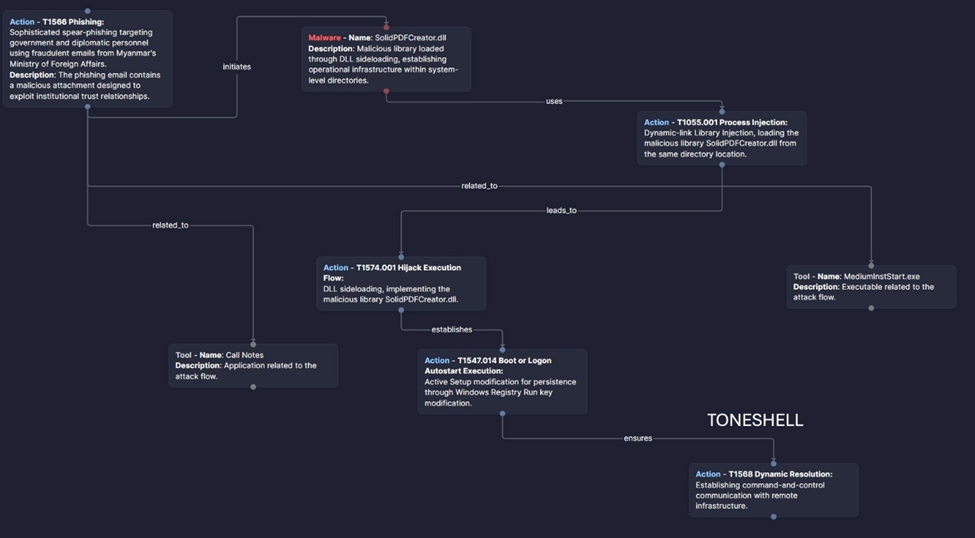
The attack initiates through sophisticated spear-phishing targeting government and diplomatic personnel using fraudulent emails from Myanmar's Ministry of Foreign Affairs with official formatting, reference number "No.187 53/ 01/ 2025( )," and malicious attachment designed to exploit institutional trust relationships through professional diplomatic language and time-sensitive meeting documentation.
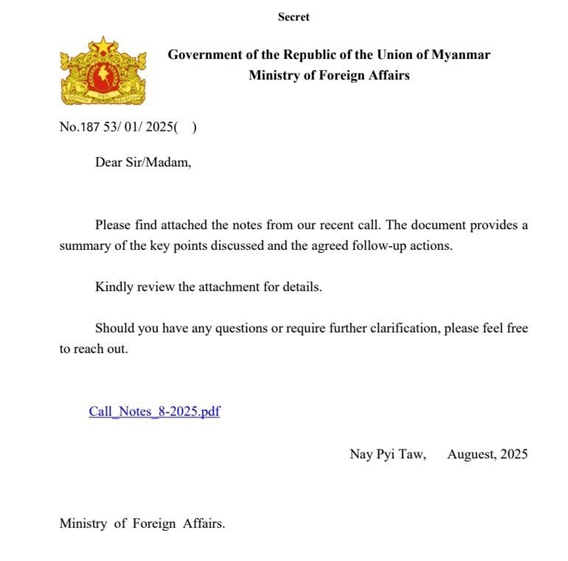
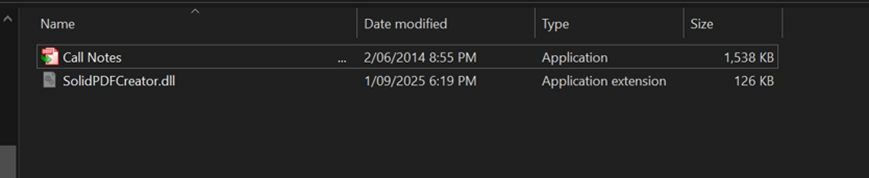
When a user clicks the embedded link “Call_Notes_8-2025.pdf” within the attachment, an archive is downloaded containing two distinct components:
Primary Executable
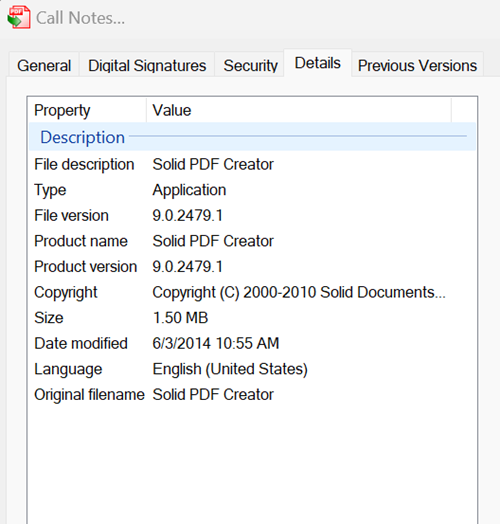
File: Call Notes.exe ("Solid PDF Creator" version 9.0.2479.1)
Size: 1,538 KB
Function: Acts as the DLL sideloading initiator and loader mechanism
Purpose: Provides legitimate functionality while enabling the loading infrastructure
Malicious Library
File: SolidPDFCreator.dll
Size: 126 KB
Function: Delivers the embedded ToneShell payload
Purpose: Concentrates malicious functionality to establish and maintain C2 operations
Upon execution, Call Notes.exe creates a directory at “C:\ProgramData\IDM\logs\”, marking a tactical shift toward system-level installation. This technique enhances persistence while deliberately avoiding the “AppData\Roaming” path previously documented in our reporting on Mustang Panda’s campaign against the TNLA Myanmar ethnic armed group. By leveraging the ProgramData directory, the malware blends into legitimate software installation artifacts, thereby reducing the likelihood of detection.
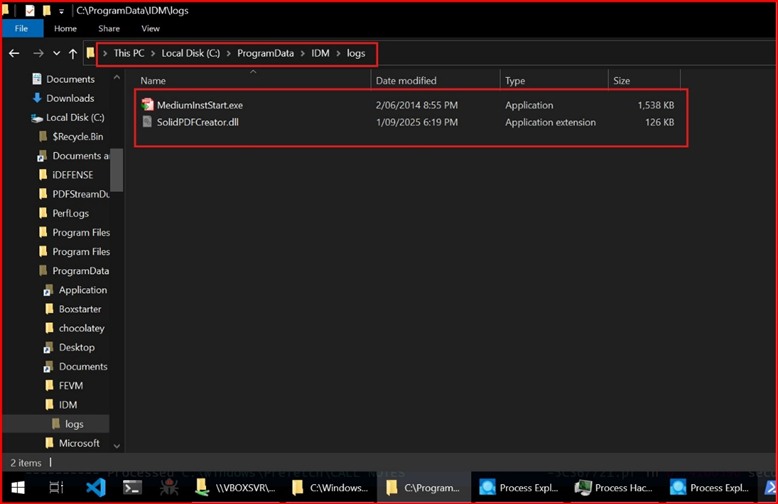
The malware implements component renaming during deployment, transforming the original "Call Notes.exe" executable into "MediumInstStart.exe" while preserving the 1,538 KB file size and maintaining the companion "SolidPDFCreator.dll" library with its 126 KB payload. This renaming strategy introduces an additional obfuscation layer that complicates forensic analysis while maintaining the PDF creation software theme through consistent library naming conventions.
Persistence Mechanism:
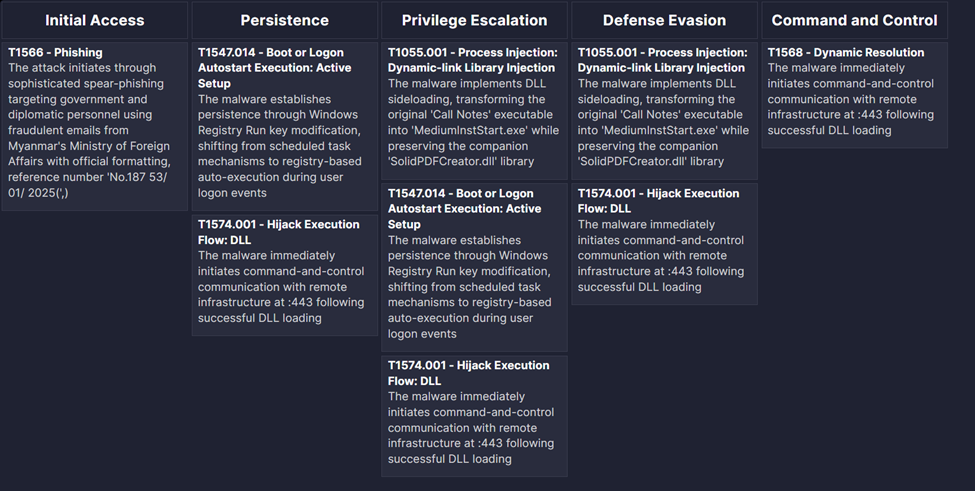
The malware establishes persistence through Windows Registry Run key modification, shifting from scheduled task mechanisms to registry-based auto-execution during user logon events.
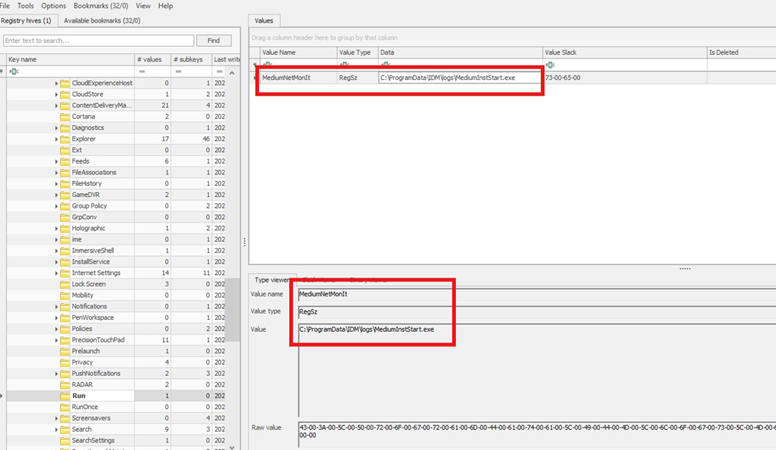
The persistence mechanism creates a registry entry at HKEY_CURRENT_USER\SOFTWARE\Microsoft\Windows\CurrentVersion\Ru n using the key name "MediumNetMonIt" that mimics legitimate network monitoring tools. The registry value points to C:\ProgramData\IDM\logs\MediumInstStart.exe, ensuring automatic execution during user logon while avoiding elevation requirements.
DLL Sideloading Process
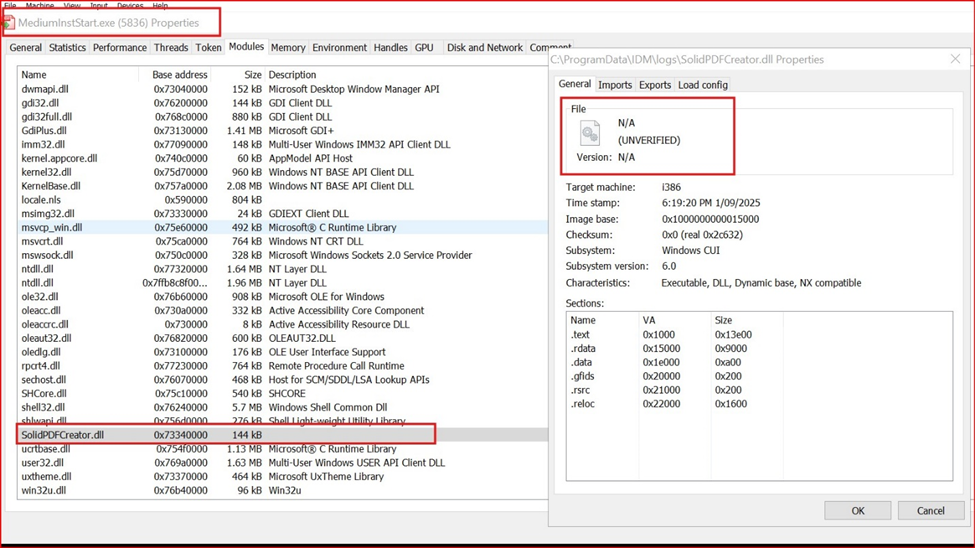
Following system reboot and persistence activation, MediumInstStart.exe sideloads the malicious library SolidPDFCreator.dll from C:\ProgramData\IDM\logs\, enabling execution of the embedded ToneShell malware under the guise of legitimate software.
Command and Control
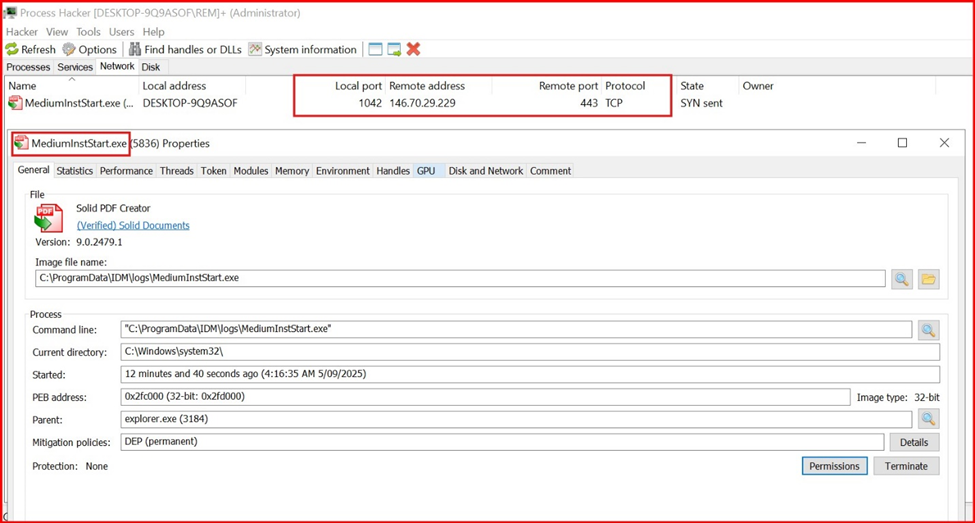
Network Communication Establishment: Following successful DLL loading, the malware establishes command-and-control communication with remote infrastructure at 146.70.29.229 over TCP port 443, leveraging HTTPS to blend with legitimate network traffic.

Prefetch File Analysis
Process: Call Notes.exe
Prefetch File: CALLNOTES.EXE-.pf*
Purpose: Tracks execution history, launch count, and load paths for performance optimization.
Observations:
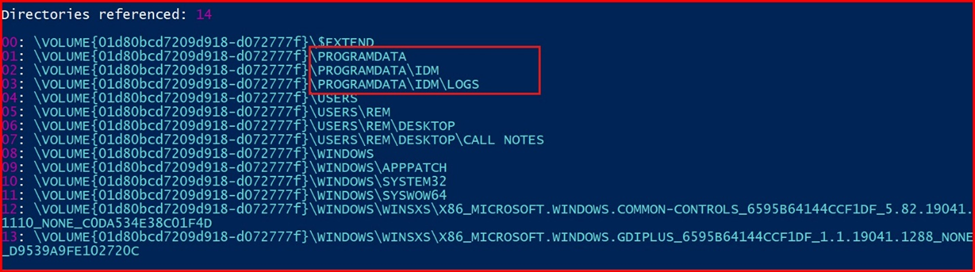
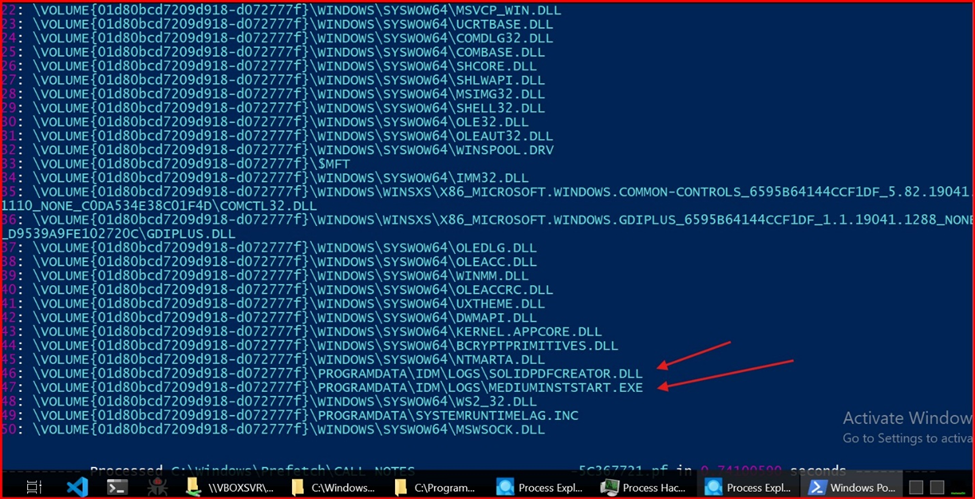
1. Directory Creation: C:\ProgramData\IDM\logs\ is created upon execution of Call Notes.exe, marking the installation location.
2. Deployed Files (MediumInstStart.exe – primary loader executable, SolidPDFCreator.dll – malicious ToneShell payload)
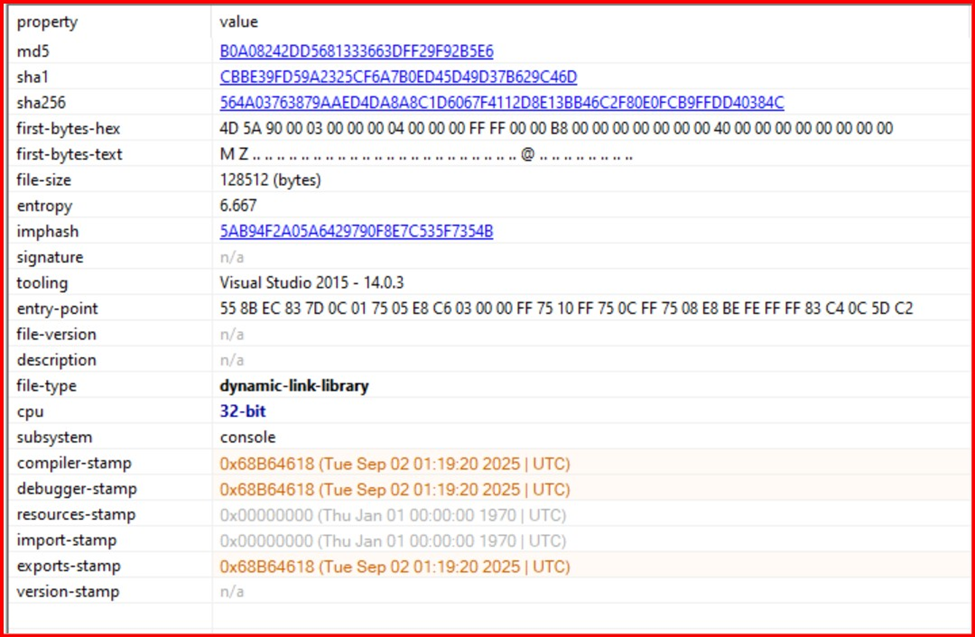
SolidPDFCreator.dll File Analysis (PEStudio)
The malicious DLL reveals sophisticated architecture disguised as legitimate PDF creation software. This 32-bit console application weighs 128,512 bytes with 6.667 entropy, indicating moderate obfuscation designed to evade static analysis detection.
Recent development activity shows compilation on September 2, 2025, at 01:19:20 UTC using Visual Studio 2015, confirming active campaign maintenance with legacy compatibility. The build environment suggests advanced threat actor capabilities while targeting broad Windows system compatibility.
File Properties:
Size: 128,512 bytes (32-bit DLL)
Entropy: 6.667 (moderate obfuscation)
Compiler: Visual Studio 2015 (14.0.3)
Build Date: September 2, 2025, 01:19:20 UTC
Subsystem: Console application
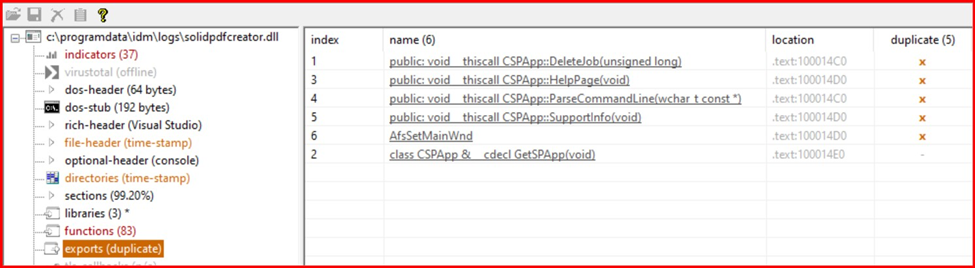
Malicious Functionality within DLL The malicious DLL SolidPDFCreator.dll exposes six export functions that enable operational capabilities while maintaining the guise of legitimate PDF software. The CSPApp interface supports job management, command parsing, and system information gathering, providing a framework for remote administration disguised as document processing. Notable functions include:
AfsSetMainWnd: Window management control
CSPApp::DeleteJob: Task manipulation
CSPApp::ParseCommandLine: Command processing
GetSPApp: Application context access
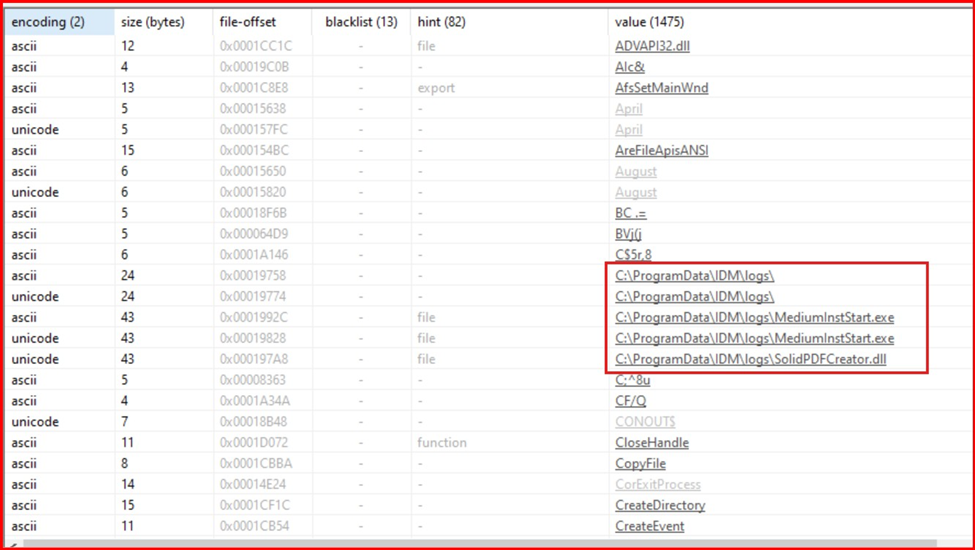
String Intelligence - 1,475 Embedded Secrets:
String analysis exposes operational awareness with hardcoded deployment paths C:\ProgramData\IDM\logs\ and registry persistence knowledge Software\Microsoft\Windows\CurrentVersion\Run. The DLL knows exactly where it lives and how it survives.
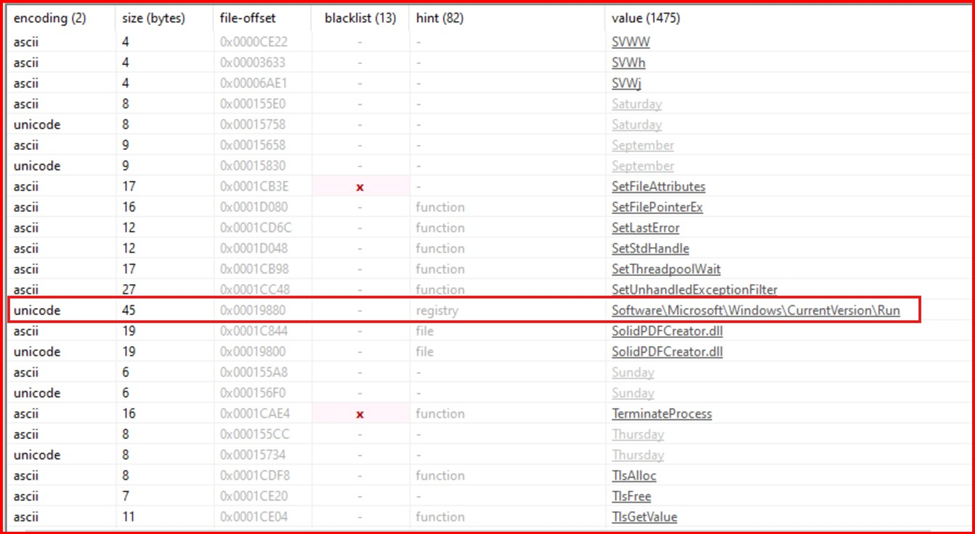
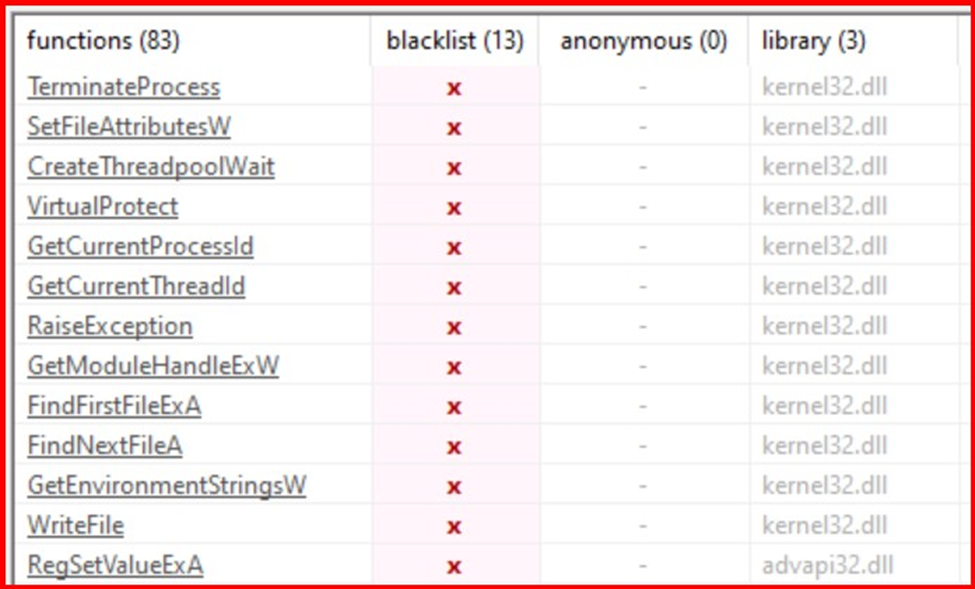
Dangerous Import Functions - 83 Total, 13 Flagged:
Critical system manipulation capabilities through kernel32.dll and advapi32.dll imports:
TerminateProcess: Kill processes silently
VirtualProtect: Bypass memory protections
RegSetValueExA: Modify registry persistence
SetFileAttributesW: Hide file traces
WriteFile: System file manipulation
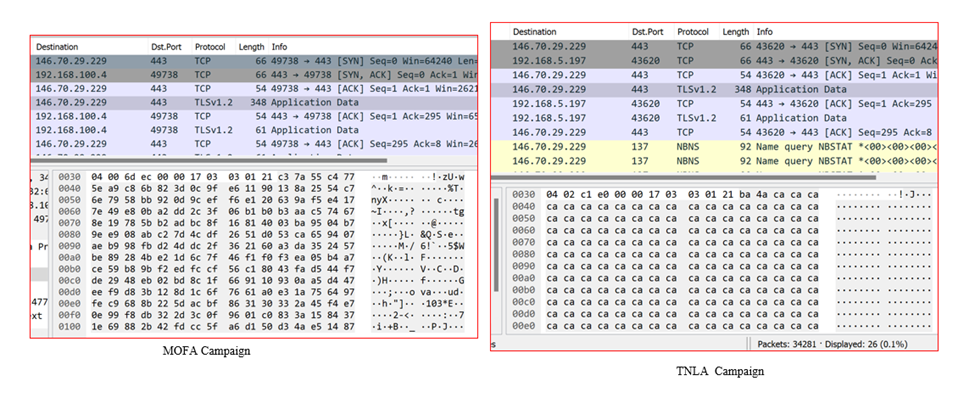
C2 Traffic Comparison – TNLA vs MOFA Campaigns
A side-by-side analysis of command-and-control (C2) traffic highlights behavioral differences between the prior TNLA campaign and the recent MOFA ToneShell campaign. In the TNLA campaign, initial TLS packets contained a distinguishable "CA" character pattern within 254 bytes, serving as a potential identifying artifact. By contrast, the MOFA ToneShell traffic exhibits standard TLS packet structure with randomized content, showing no immediately obvious markers. This shift indicates the actor modified the C2 communication to better evade detection while maintaining functional remote access.
Conclusion
SolidPDFCreator.dll represents a sophisticated, actively maintained malware payload with comprehensive system manipulation capabilities disguised as legitimate PDF processing software, demonstrating Mustang Panda's continued tactical evolution toward advanced masquerading and reduced detection footprint.
MITRE ATT&CK MAPPING
Contextual Intelligence
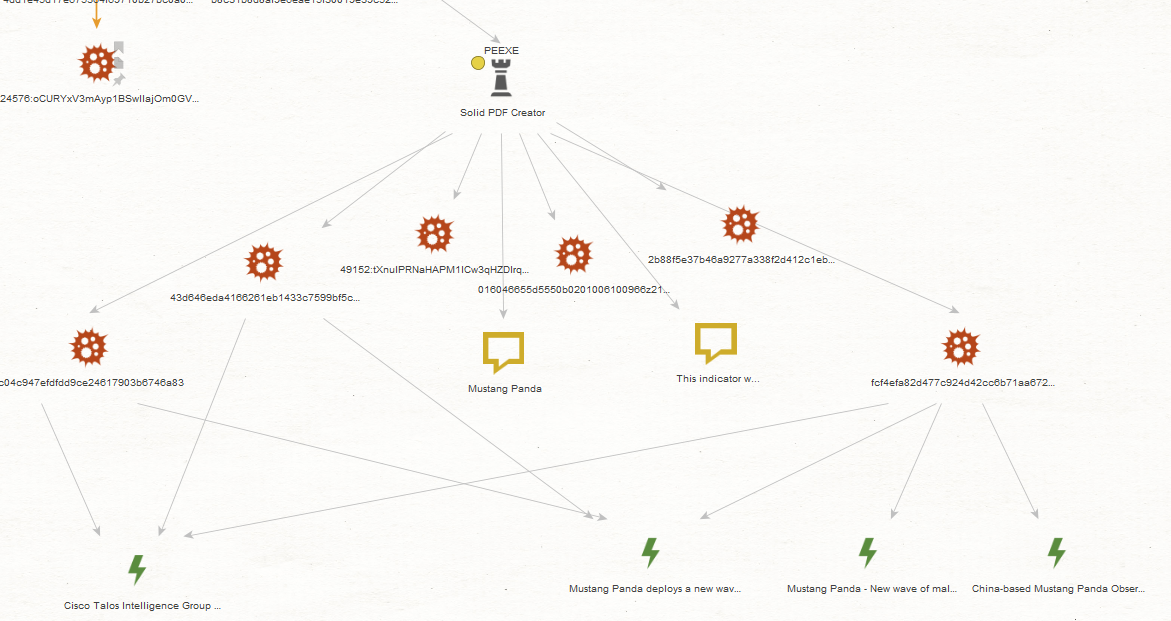
The loader identified in this ToneShell campaign aligns with one previously deployed by Mustang Panda during operations against European diplomatic entities in 2022, as reported by Cisco Talos (https://blog.talosintelligence.com/mustang-panda-targets-europe/). While the loader remains consistent, the ToneShell DLL exhibits notable differences, indicating an updated or customized payload. This reflects Mustang Panda’s pattern of reusing established delivery mechanisms while evolving their malware components to adapt to new campaigns and targets.
Recommendation
Mitigation with powershell commands
1. Kill the malicious process
Get-Process | Where-Object { $_.Path -like
"*MediumInstStart.exe*" } | Stop-Process -Force
2. Remove autorun registry entry
Remove-ItemProperty -Path
"HKCU:\Software\Microsoft\Windows\CurrentVersion\Run" -
Name "MediumNetMonIt" -ErrorAction SilentlyContinue
3. Delete the malicious folder and its contents
Remove-Item -Path C:\ProgramData\IDM\logs -Recurse -Force4. (Optional) Block outbound connection to known C2 server
New-NetFirewallRule -DisplayName
"Block_Malware_C2_146.70.29.229" -Direction Outbound -
RemoteAddress 146.70.29.229 -Action Block
Indicator Of Compromise (IOC)
b8c31b8d8af9e6eae15f30019e39c52b1a53aa1c8b0c93c8d075254ed10d8dfc (Call Notes.zip)
fcf4efa82d477c924d42cc6b71aa672ab2381ca256769925ae34dabe2e77e025 (MediumInstStart.exe)
564a03763879aaed4da8a8c1d6067f4112d8e13bb46c2f80e0fcb9ffdd40384c (SolidPDFCreator.dll)
146.70.29.229
HKEY_CURRENT_USER\SOFTWARE\Microsoft\Windows\CurrentVersion\Ru n\ MediumNetMonIt (Registry Run Key)
C:\ProgramData\IDM\logs\ (File Path)
YARA Rule
rule Toneshell_MOFA_MM {
meta:
description = "Mustang Panda’s ToneShell
backdoor masquerading as the Myanmar Ministry of Foreign
Affairs"
author = "MM_SherLock"
hash =
"564A03763879AAED4DA8A8C1D6067F4112D8E13BB46C2F80E0FCB9FFD
D40384C"
id = "7da8c607-bf06-4f78-9a8b-
e23362f0191f"
date = "2025-09-06"
strings:
$a =
"C:\\ProgramData\\IDM\\logs\\MediumInstStart.exe" ascii
wide nocase
$b =
"C:\\ProgramData\\IDM\\logs\\SolidPDFCreator.dll" ascii
wide nocase
$c = "AVbad_exception" ascii wide nocase
$d = "ParseCommandLine" ascii wide nocase
$e = "AfsSetMainWnd" ascii wide nocase
condition:
uint16(0) == 0x5a4d and (($a and $b) or (4
of ($*)))
}
Detection Engineering
SIGMA
title: Suspicious File Activity in ProgramData IDM Logs
(Mustang Panda ToneShell)
id: ac3939ce-71fe-4550-85d8-b89fcc670aaf
status: stable
description: Detects file creation/rename/write activity
under C:\ProgramData\IDM\logs\ consistent with Mustang
Panda’s ToneShell deployment pattern.
references:
    - internal research
author: MMSherlock
date: 2025-09-02
tags:
    - attack.defense-evasion
    - attack.t1036.005
logsource:
    product: windows
    category: file_event
detection:
    selection:
        TargetFilename|contains:
            - '\AppData\Local\DevicesMonitor'
            - '%LOCALAPPDATA%\DevicesMonitor'
        TargetFilename|endswith:
            - '.com'
            - '.ini'
            - '.txt'
            - '.dll'
            - '.exe'
    condition: selection
falsepositives:
    - unknown
level: high
title: Suspicious DLL Load from ProgramData IDM Logs
(Mustang Panda ToneShell)
id: bde2fcd5-1be8-432d-8fd1-e7e990ca042b
status: stable
description: Detects the loading of SolidPDFCreator.dll
from C:\ProgramData\IDM\logs\ consistent with Mustang
Panda’s ToneShell sideloading activity.
references:
- internal research
author: MMSherlock
date: 2025-09-02
tags:
- attack.persistence
- attack.t1574.002
logsource:
product: windows
category: image_load
detection:
selection:
Image|endswith: '\MediumInstStart.exe'
ImageLoaded|endswith: 'SolidPDFCreator.dll'
condition: selection
falsepositives:
- unknown
level: hightitle: Mustang Panda ToneShell Persistence via Registry
Run Key
id: 14ffdf33-3839-40f0-b42e-bf86ef0b1174
status: stable
description: Detects persistence mechanism used by Mustang
Panda ToneShell where a registry Run key "MediumNetMonIt"
is created/modified to auto-execute MediumInstStart.exe
from C:\ProgramData\IDM\logs\ at user logon.
references:
- internal research
author: MMSherlock
date: 2025-09-02
tags:
- attack.persistence
- attack.t1547.001
logsource:
product: windows
category: registry_event
detection:
selection:
TargetObject|contains:
'Software\Microsoft\Windows\CurrentVersion\Run\MediumNetMo
nIt'
Details|contains|all:
- 'ProgramData\IDM\logs'
- 'MediumInstStart.exe'
condition: selection
falsepositives:
- unknown
level: hightitle: Immediate C2 Over HTTPS to Known ToneShell IP
(Mustang Panda)
id: 486037a3-c6f2-4e1e-ac67-07975f04c105
status: stable
description: Detects immediate TCP connection initiation
to 146.70.29.229:443 masquerading as HTTPS, consistent
with Mustang Panda ToneShell beaconing after
persistence/launch.
references:
- internal research
author: MMSherlock
date: 2025-09-02
tags:
- attack.command-and-control
- attack.t1071.001
logsource:
product: windows
category: network_connection
detection:
selection:
Image|endswith: '\MediumInstStart.exe'
DestinationPort: '443'
DestinationIp: '146.70.29.229'
condition: selection
falsepositives:
- unknown
level: highSNORT Rule for Intrusion Detection (TNLA Campaign)
alert tcp any any -> any 443 ( msg:"SkinH - PlugX fake-TLS
with repeated CA in payload"; flow:to_server,established;
content:"|17 03 03|";offset:0;depth:3;content:"|CA CA CA
CA|";offset:7;depth:30;classtype:trojan-
activity;sid:1000103;rev:2;)
Myanmar Under Siege: Mustang Panda’s APT Operations and China’s Geostrategic Drive
Recently, Mustang Panda has conducted targeted operations against both the TNLA ethnic armed group and Myanmar’s Ministry of Foreign Affairs via spear-phishing campaigns. Myanmar’s strategic location serves as a critical access point to the Indian Ocean and forms a key part of China’s Mekong–Lancang BRI projects, making the country pivotal for Beijing’s regional ambitions. Consequently, Chinese APT activity in the area shows no signs of de-escalation, as China seeks to extend its power and domain dominance by targeting government institutions and influential non-state actors to secure political, economic, and geostrategic leverage in Myanmar.
The opinions expressed herein are entirely those of the authors and in no way reflect the views or positions of their employer.
Researched by KYAW PYIYT HTET, PHYO PAING HTUN